
A couple of weeks ago, I had the chance to go to Panama City to attend RE+ Centroamérica. You all schedule time off work to attend solar conferences, right?
I combined exploring the Canal and historic neighborhoods of a thriving city and lots of Spanish practice with learning about the solar market in various Central American countries. Panama is a leader right now, thanks to domestic tax incentives, favorable policy, a good net metering law, and a reasonably healthy US Dollar-based economy.
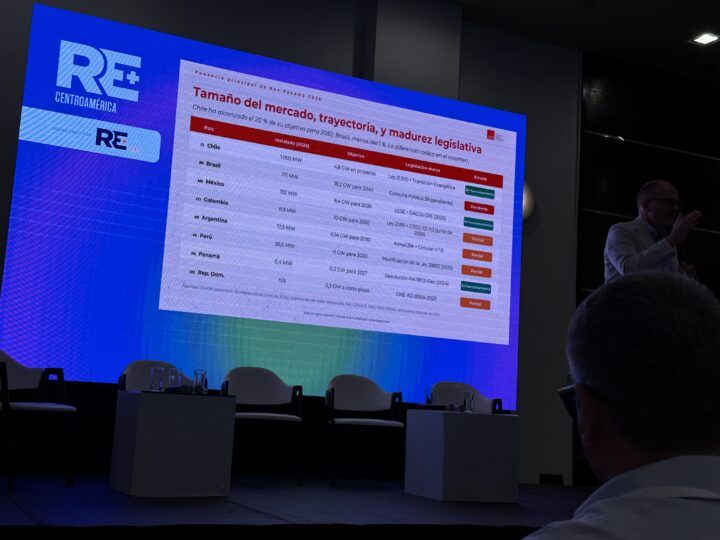
Like many countries, Panama does not have any of its own fossil fuels and realizes the urgency of moving toward energy independence where possible. In Panama’s case, it is interesting that a significant part of their economy is based on moving fossil fuels from one side of the country to the other—both through the Canal and the Trans-Panama Pipeline, which carries crude oil. Panama is also in the process of developing a liquid petroleum gas pipeline and LPG terminals on each coast.
Panama is currently the largest Central American solar market. What stood out to me was the lack of American companies marketing there. Nearly every manufacturer present was Chinese, and the booths on the expo floor were staffed by reps fluent in both English and Spanish.
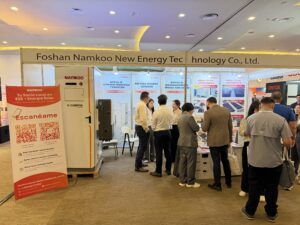
While I picked up some Spanish terms for lots of solar equipment, the best part of the event was connecting with installers from different countries to learn about their unique challenges and victories. I didn’t exactly find the Panamanian equivalent of Power Trip Energy however I met plenty of like-minded folks.

If you are rooting for the American economy, you might find it frustrating that while the US developed PV technology—and much of the inverter and ESS tech—we have effectively ceded that market to China, which now manufactures about 85% of solar panels globally. I was personally struck by the massive lost opportunity for US business to supply solar equipment to our neighbors as they transition from fossil fuels to renewables.
Which brings us to the topic of US administration tariff policies. The US government recently announced significant tariffs and outright bans on certain Chinese power equipment. While trade policy implementation is complex, the bottom line for solar panels will be a noticeable price increase. While we always strive to source products made in the US with as much domestic content as possible, it is nearly impossible in this market to completely avoid components manufactured in China.
China controls 80–83% of global polysilicon refining capacity, produces 95–98% of the world’s silicon wafers, and manufactures 85–92% of solar cells. While domestic industrial policies like the 2022 Inflation Reduction Act and the CHIPS and Science Act aimed to increase US-based production, those policies have been decimated by the current administration. As a result, we will not see a significant shift back to US-based manufacturing anytime soon. In fact, if you were designing a program to hinder solar adoption in the US, this would be it.
At our retail level, as a small fish in the solar ocean, we will see significant cost increases. Section 232 tariffs will create a Minimum Import Price and add another 15% tariff on top of that at the imported wholesale level. We cannot predict exactly how that will affect our final costs or yours down the road.
However, we currently have a warehouse stocked with SilFab 440 QD modules at pre-tariff prices. Call us today to inquire about a project for your home while our current inventory lasts.
If the billionaires aligned with the oil industry and utility monopolies don’t want you installing solar, perhaps it’s in your best interest to move ahead with your home installation ¡inmediatamente!