
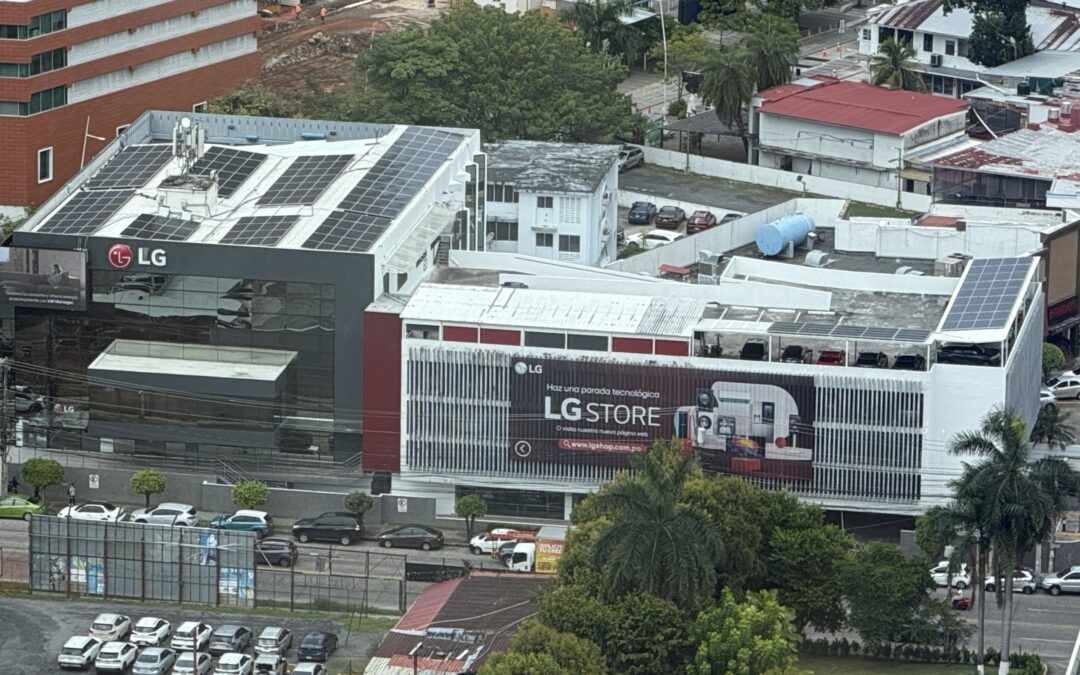
A Report from Panama and a Look Ahead to Section 232 Tariffs
A couple of weeks ago, I had the chance to go to Panama City to attend RE+ Centroamérica. You all schedule time off work to attend solar conferences, right?
I combined exploring the Canal and historic neighborhoods of a thriving city and lots of Spanish practice with learning about the solar market in various Central American countries. Panama is a leader right now, thanks to domestic tax incentives, favorable policy, a good net metering law, and a reasonably healthy US Dollar-based economy.
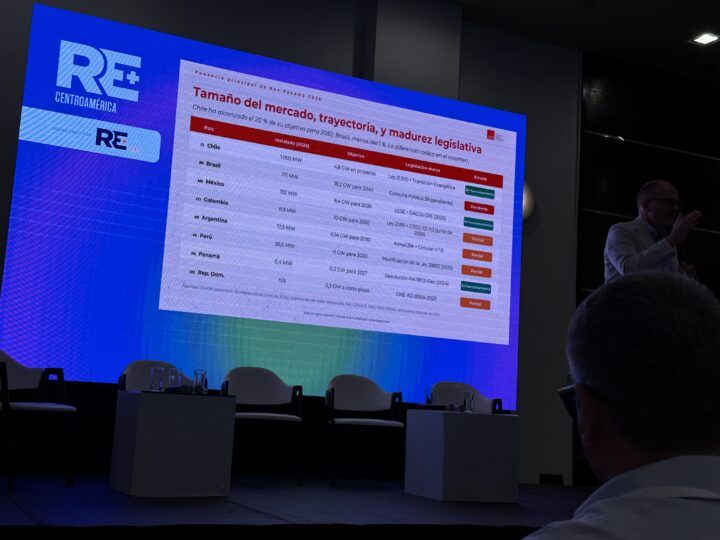
Like many countries, Panama does not have any of its own fossil fuels and realizes the urgency of moving toward energy independence where possible. In Panama’s case, it is interesting that a significant part of their economy is based on moving fossil fuels from one side of the country to the other—both through the Canal and the Trans-Panama Pipeline, which carries crude oil. Panama is also in the process of developing a liquid petroleum gas pipeline and LPG terminals on each coast.
Panama is currently the largest Central American solar market. What stood out to me was the lack of American companies marketing there. Nearly every manufacturer present was Chinese, and the booths on the expo floor were staffed by reps fluent in both English and Spanish.

While I picked up some Spanish terms for lots of solar equipment, the best part of the event was connecting with installers from different countries to learn about their unique challenges and victories. I didn’t exactly find the Panamanian equivalent of Power Trip Energy however I met plenty of like-minded folks.

If you are rooting for the American economy, you might find it frustrating that while the US developed PV technology—and much of the inverter and ESS tech—we have effectively ceded that market to China, which now manufactures about 85% of solar panels globally. I was personally struck by the massive lost opportunity for US business to supply solar equipment to our neighbors as they transition from fossil fuels to renewables.
Which brings us to the topic of US administration tariff policies. The US government recently announced significant tariffs and outright bans on certain Chinese power equipment. While trade policy implementation is complex, the bottom line for solar panels will be a noticeable price increase. While we always strive to source products made in the US with as much domestic content as possible, it is nearly impossible in this market to completely avoid components manufactured in China.
China controls 80–83% of global polysilicon refining capacity, produces 95–98% of the world’s silicon wafers, and manufactures 85–92% of solar cells. While domestic industrial policies like the 2022 Inflation Reduction Act and the CHIPS and Science Act aimed to increase US-based production, those policies have been decimated by the current administration. As a result, we will not see a significant shift back to US-based manufacturing anytime soon. In fact, if you were designing a program to hinder solar adoption in the US, this would be it.
At our retail level, as a small fish in the solar ocean, we will see significant cost increases. Section 232 tariffs will create a Minimum Import Price and add another 15% tariff on top of that at the imported wholesale level. We cannot predict exactly how that will affect our final costs or yours down the road.
However, we currently have a warehouse stocked with SilFab 440 QD modules at pre-tariff prices. Call us today to inquire about a project for your home while our current inventory lasts.
If the billionaires aligned with the oil industry and utility monopolies don’t want you installing solar, perhaps it’s in your best interest to move ahead with your home installation ¡inmediatamente!

Tesla Discontinues Solar Roof Tiles
I have seen several companies try to make the solar roof tile idea work, and while I hope something like this becomes practical someday, I was very skeptical about Tesla’s tiles. This Electrek article provides some context.
Tesla announced the roof tiles in 2016 in a flamboyant manner that doesn’t really resonate with me. I need to see spec sheets, firm prices, products in stock at distributors, and happy customers. We never really got that with the Solar Roof tiles.
We are currently Authorized Tesla installers for the Powerwall 3, which has been a great product. Tesla has engineered, refined, and produced it with effectiveness, reliability, and economy. There are now other products that are a better match for some homes, but the Powerwalls have been a great accomplishment for Tesla.
In my opinion, the Solar Roof tiles were up against several industry and market factors:
- They offered multiple tile shapes, creating a diversity of products, which would hamper the economy of scale that I’ve seen is necessary for solar manufacturers to succeed.
- Each project was very custom, which is a struggle for a national company.
- Each home project obviously needs a building permit from a different AHJ (Authority Having Jurisdiction). Different AHJs follow different sets of codes for building and electrical permits and inspections. This is even a challenge for us here in our little corner of Washington State. I wouldn’t want to wrestle with these issues nationally. Our permitting system doesn’t make it easy for products like that. Local specialists handle construction best.
- The installation requires the skills and knowledge of two different trades – roofers and electricians. Here at Power Trip Energy, we’re proud that our installers are journeymen electricians with roofing and carpentry skills, but these guys are unicorns. Normal job sites and trades do not work like that, and roofers and electricians are very different people, to over-generalize. We can make it work at our scale, but I can see how this becomes another contributing factor nationally.
After 10 years of trying, I think they could not compete in terms of price or installation efficiency with a standard solar array over a standard roof. I can see that it looked cool, but there is really no reason for it. A standard array looks cool too.
Unfortunately, Tesla’s CEO has developed a reputation for not following through on many of his ambitious commitments. The accomplishments Tesla has made with EVs and Powerwalls are laudable; however, Tesla probably has not been able to do what our little company does with solar every day – install a residential solar array without batteries, at an economically sensible price for the customer, with reliable equipment, and make money (and have fun) doing it.

Solar and EV’s Mean Lower Bills For Everybody
Despite federal policy, the adoption of grid tied PV and electric vehicles (EVs) continues to surge in the US. Through the use of simple smart charging to determine the best timing, this can not only save the customer money but also can serve to stabilize the grid. PV systems help the grid by peak load shaving during hot summer days. Also, the grid-tied PV system avoids the 5-10% losses experienced in the grid transmission network by generating power at the point of usage. EV’s are an excellent means of reducing air pollution, dependence on oil tyrants, and through smart charging, can help stabilize the grid by filling the overnight trough in grid energy usage. Our clients reach the fullest value through the combination of PV on the roof and an EV in the garage, when one is replacing the consumption of gasoline with homegrown clean solar power.
RMI has been talking about this potential for more than 25 years. This article represents their latest thinking about the benefits of EV’s on the grid and on your bills.
https://rmi.org/resources/reality-check-more-evs-could-mean-lower-energy-bills/

The Future Is Uncertain. Your Power Bill Doesn’t Have to Be.
This has been an anxious year, with prices climbing, the stock market jumping, and bad news out of every corner of the globe. In times of uncertainty, I believe solar is one of those rare investments that pays off in all possible futures. Let’s explore that: if we assume a reputable company for install, is solar really flexible enough of an investment for these uncertain times?
What if I Sell?
If you aren’t committed to living in your home long-term, I have good news. The most comprehensive study on the subject found that, on average, buyers pay a premium for solar that recoups most of the cost of install. The two chief drivers of that premium are the costs of installation and electricity, and those rates continue to climb, so the premium remains intact even today. This means someone installing today could break even on their solar investment by selling their home after just a few years of savings. Even financed panels pay for themselves this way — unlike a lease or PPA. In markets where solar is uncommon, appraisers might undercount a system because they can’t find enough comparable sales nearby, but the Appraisal Institute continues to train on this material and may help homeowners document their value properly.
What if I Stay?
So if you stay in your home with solar, what other futures are we looking at? To answer that, think about what you’re actually betting on when you don’t go solar. You’re betting that utility pricing stays predictable and affordable, that the grid stays reliable, and that fuel and electricity costs won’t outpace inflation. Every one of those bets has been wrong somewhere in the country in the last few years, and locally we’ve been losing all three.
Where Are We Now?
That bet on grid reliability is critical. More heat waves, cold snaps, and data centers mean more stress piled on a grid that is decades old and fraying at the edges. Utilities are investing in smart grid options to shed peak loads or shift them to better times of day. Puget Sound Energy’s Flex program is an example of this, treating thousands of customers’ home batteries, smart thermostats, and possibly EV chargers as one coordinated resource — a “virtual power plant.” Flex incentives to customers come from the savings of not having to build an actual power plant, so it could actually be win-win. These benefits aren’t available yet at Clallam or Jefferson PUD, but with microgrid projects on the books already, there’s hope for the future.
Where are We Headed?
In the interests of exploring all possible futures, let’s consider two extremes: one where everything goes wrong, and another where everything goes right. If there’s a grid collapse, solar will certainly be a resource worth having. Even a 2-week outage will go far easier if your neighbors can charge their phones at your house. At the other extreme, utilities and customers turn the grid into a fully decentralized, peer-to-peer network. Customers generate and trade power among themselves while utilities maintain infrastructure. In that world, having solar already makes you a major player in that market before it fully arrives.
But Seriously
As much as I’m a fan of science fiction, neither of these extremes is likely. With so much effort to save the grid, it’s unlikely to totally collapse. With so much investment in the current model it’s unlikely to fully decentralize. That means the most likely scenario for the next twenty years is that they will look like the last twenty…only with higher electric bills. All of this is why I believe the future — any future — is better with solar. The near future. The far future. From apocalypse to utopia, from economic collapse to burgeoning marketplace, solar is one of the best ways to brighten your future. If you think I missed a scenario, please let me know in the comments. If you agree that solar makes the future bright and you don’t have it yet, give us a call.
(Matthew Barrett is the Solar Navigator at Power Trip Energy Corp, based in Port Townsend, WA. Power Trip Energy serves Clallam, Jefferson and Kitsap counties and the surrounding region.)

You Don’t Have to Do It All at Once
Last week, I stumbled onto one of the best reminders of why I love my job. A guy I’ll call “Luke” had gone solar in Hawaii, and he was telling people online that the cost of doing so here in the PNW would exceed six figures. When I gently pointed out that these systems usually run $25K–$35K, he said I had to add on the price of a new roof, batteries, and a new EV. No matter how I tried to explain, he kept insisting that these were necessities: to Luke, this was all a single, indivisible project. He even said he couldn’t go solar in Kitsap because he couldn’t afford another electric vehicle!
After reflecting on the conversation, it occurred to me that Luke didn’t know about Washington’s net metering policies. Most utilities here credit your account kilowatt-for-kilowatt for any electricity you export to the grid–what’s commonly called “one-to-one net metering.” The grid, in effect, functions like a very large, very reliable battery that you don’t have to buy, install, or maintain. This allows Washington solar owners to bank up months’ worth of summer credit to get them through the winter.
Coming from Hawaii, Luke had very different expectations. Since 2015, Hawaiian solar installs are either credited at a sharply reduced rate or forbidden from exporting to the grid at all. Without a battery, you can’t even store midday excess for that evening, let alone save it for winter. Even with batteries, your home needs to be fully electrified to minimize the waste of anything over what is necessary to charge them. An electric vehicle charging in the daytime is exactly the kind of energy sink that a smart homeowner ought to have to avoid losing considerable value from their solar.
Luke’s thinking was actually really smart–for a Hawaii homeowner. He just hadn’t wrapped his head around the genuine gift of Washington’s net metering. Here, going solar doesn’t require a complete lifestyle reinvention. It doesn’t require a new car, a new roof (unless your roof actually needs it), full home electrification, or a bank of batteries in your garage. It just requires home ownership, grid access, and a willingness to let us take a look.
That gift, however, comes with an expiration date: PSE has exceeded the 4% threshold that allows them to change the net metering schedules, and the current schedules expired last year. That 4% threshold refers to 4% of the 1996 peak load–a figure that has no actual technical bearing on anything here 30 years later, but it’s the metric that has been used in WA’s Net Metering Law since 1998. Andy wrote about this back in 2024, and the Value of Solar study group he mentioned there has been funded and convened. Its findings are due this autumn, and utilities will surely use those findings to set new rates if the state allows it. People who get in before that change are expected to be grandfathered in.
So, good news for Luke–and maybe for you, too!
- You don’t have to do it all at once.
- You don’t have to redesign your entire life around it.
- You just have to start.
Give us a call: the gift is real, and it’s yours to claim.
–Matthew Barrett is the Solar Navigator at Power Trip Energy Corp, based in Port Townsend, WA. Power Trip Energy serves Clallam, Jefferson and Kitsap counties and the surrounding region. Questions? Call us at (360) 643-3080 or fill out the form in the sidebar to know more.

How to Opt Out of Rising Energy Prices: A Solar Strategy
Energy prices are climbing at rates we haven’t seen in decades, and if you have been shocked by your recent bills, you’re not alone. Between record-high gas prices and double-digit utility hikes, the perception that something has changed is real.
But here’s the good news: You don’t have to be a passive passenger on this ride.
Why is this happening?
Electricity is rising for a few reasons:
- The Data Boom: The explosion of AI and cloud computing has created an insatiable demand for electricity.
- The “Electrification” Trend: As more homes move away from gas and toward heat pumps and generally replace consumption of gas and propane with electricity, which is a very good thing.
- Electric Vehicles: The conversion of our personal transportation, and more busses and delivery vehicles to EV’s is a positive trend resulting in lower costs overall, but definitely contributing to increasing electrical demand.
- Grid Infrastructure: Locally, utilities like Puget Sound Energy (PSE) and our regional PUDs are raising rates. Some have seen 12% increases this year alone, with rate structures already approved for 30% increases over the next three years.
Oil, gasoline and diesel have their own issues leading to higher prices:
- Global Instability: While the US is a leading oil producer, our prices are still tethered to a global system. Recent conflicts have sent gas prices in Washington to a record-breaking $5.67 per gallon this month. Increasing domestic oil production has not helped secure US energy independence.
- Oil Companies and Cartels Serve Shareholders and Producers, Not Customers: Oil companies and petro-states face intense pressure to maximize profits in whatever manner possible. In the US, oil companies have a much more powerful voice to influence policy in Washington DC than individual citizens.
The “K-Shaped” Reality
Economists have called the present situation the “K-shaped economy.” Financial educator Peter Atwater originally used the term to describe the uneven recovery after COVID-19, but it is now recognized as the “new normal” for the US economy. In the US, we see a shrinking middle class and the gap between rich and poor is growing. While the wealthy see their assets grow, middle-class families are being pulled down by the rising cost of food, staples, and—most aggressively—energy.
A 2025/2026 Dept. of Energy study highlighted that 1 in 3 households now struggle to pay their energy bills. For many people on the Olympic Peninsula, this phenomenon is a direct threat to their long-term financial stability.
The Solution: Building Your Own “Energy Hedge”
You can cross your fingers and hope for better government policy, but I don’t recommend waiting to be helped. The most effective way to protect your family is to decouple your lifestyle from the global energy market. We should all strive to live full lives while not consuming excess energy, however for the energy we do use, there is a better way.
- Solar as a Fixed Cost: When you install solar, you aren’t “buying” power anymore; you’re “owning” it. You trade an unpredictable, rising monthly expense for a fixed, one-time investment. The daily solar energy reaching your home is available for you with no middle-man.
- The EV Advantage: Combining solar with an Electric Vehicle allows you to “fuel” your car with the sunshine hitting your roof. Even with Washington’s high gas taxes and $5+ per gallon prices, your “per gallon” equivalent with solar is essentially pennies.
- Local Incentives: While federal credits have shifted, Washington still offers a Sales Tax Exemption on solar installations through 2029, saving you 9-10% right off the top.
Making these investments in your personal energy policy are one way you can make sure you don’t get stuck on that downward arm of the “K”.
A Note to Our Community: Many of you reading this have already made the switch. You’ve seen the meters run backward and felt the relief of a $10-20 electric bill in the summer (base rate only with no kWh charges.). Would you consider forwarding this to one friend or neighbor? Helping our community become energy-independent is how we protect our clients and keep our local economy more stable and resilient against these external shocks.
23 Years of Local Expertise
We’ve spent over two decades on the Olympic Peninsula helping over 1,200+ families take control of their energy future. We understand local microclimates and the specific requirements of our local utilities.
Ready to see the math for your own home? Click here to request a custom Solar Assessment or give us a call. Let’s make sure the only thing rising this summer is the sun—not your power bill.
Our Grid is Growing – One Commissioner’s Warning About Upcoming Energy Challenges and How Solar Can Help
In a recent Jefferson PUD newsletter, there was a thoughtful essay from Dan Toepper, one of the three JPUD commissioners. At Power Trip Energy we feel fortunate JPUD has three commissioners who manage the present as well as look ahead. His essay is linked here https://www.jeffpud.org/the-power-squeeze/
Commissioner Toepper calls our attention to the forecasted trends of increasing power demand and decreasing power generation capacity. The increase is from population growth and data centers taking advantage of the PNW cheap power. The decrease is a result of carbon-based (coal) plant retirements and potential decrease in hydroelectric generation, for reasons both voluntary and climate-wise. These troubling trends are compounded by grid congestion, which isn’t just a local issue; it’s a regional one involving organizations like the Bonneville Power Administration (BPA) and the Western Electricity Coordinating Council (WECC), which manages the “highways” of our power grid.
He points out that responses to these issues will certainly cause increasing electricity prices no matter what path we take. He correctly points out that one of the smartest things we can do is alleviate this pressure upon ourselves through efficiency and energy conservation. We could all use the reminder to ourselves that once we’ve met the basic needs, our quality of life is not dependent on how much energy we consume.
The commissioner mentions the use of natural gas power plants for meeting current demand increases as a bridge to what comes later. I do believe it is possible to meet demand growth with a combination of renewables, utilization of storage, intelligent load shifting, and energy conservation. Renewables plus storage can create We can thereby eliminate the need for future increase in carbon-based fossil fuel consumption. While allocating our resources in this manner would require more dollar investment under our current economic models, I feel the benefits of decreased pollution are worth it, not to mention the political benefits of being less dependent upon fossil fuels and all of the economic sensibility and liberty that brings.
As an individual you will not have much effect on national energy policy, and unless I am imagining things, the fossil fuel industry has a much more controlling say in how things go with our federal government than you do. The good news is that you can control your personal energy policy starting right now. Your choice to invest in rooftop solar PV can help alleviate these coming pressures for yourself and your community. We are here to help you evaluate your options and install the most sensible, effective and robust solar array for your home.

8.4 kW PV system with Maxeon PV modules, Port Townsend, May 2025

PSE Customers Can Get Rebates Towards Batteries and Annual Payments Through PSE’s Flex Program
We have been installing batteries as companions to our rooftop solar arrays for homes since 2004. However due to the high price and functional limitations we have been generally discouraging of using batteries for home back up until 2023. At that time the development of available products had reached a lower price and higher functionality that caused us to revise our opinion and become excited to install these battery back-up systems for our clients and feel they were getting a good value for their investment.
As of 2025, there became an economic reason for these systems as well for our clients in PSE territory. If you are a Puget Sound Energy (PSE) customer, you are eligible to join the PSE Flex Batteries program. This “Virtual Power Plant” (VPP) initiative pays you to help stabilize the grid, often covering a significant portion of the cost of the system itself.
What is a “Virtual Power Plant” (VPP)?
In the past, when energy demand spiked (like on a freezing January morning or a record-breaking July afternoon), utilities had to fire up expensive, carbon-heavy “peaker” plants to meet the need. The PSE Flex Batteries program replaces those plants with technology. By networking thousands of residential batteries together, PSE creates a “Virtual Power Plant.” When the grid is under stress, PSE can briefly pull a small amount of stored energy from your battery (and your neighbors’) to balance the load. In exchange for this “flexibility,” they pay you.
The Financial Rewards: Upfront & Ongoing
The incentives for this program are some of the most aggressive in the country, especially with the 2026 updates.
-
Enrollment Bonus: Most customers receive a one-time check of up to $1000 per battery for signing up (e.g., if you have two Franklin aPower batteries, you could receive $2,000 upfront).
-
Annual Participation Payments: As long as you stay in the program, you earn an annual reward of up to $500 per battery, per year, usually delivered via an e-gift card.
How it Works
The program is fully automated. When demand is high, PSE triggers a “Flex Event.” Your battery will automatically discharge power to the grid. There are typically no more than 100 events per year (50 in summer, 50 in winter). PSE will never drain your battery completely. The program is hard-coded to leave at least 20% of your battery capacity as a reserve. If a major storm is forecasted, PSE generally suspends Flex Events to ensure your battery is at 100% capacity for potential outages. If you know you need every drop of power for a big event at your house, you can opt out of any specific Flex Event through your battery’s mobile app.
What Battery Systems are Compatible and Qualify for the Flex Program?
As of early 2026, the program includes Tesla Powerwalls, Solar Edge Home Hub Inverters and Batteries, Enphase IQ Batteries, and FranklinWH aPower systems.
How to Get Started
Contact us at Power Trip Energy and we will begin to assess your needs and whether this program might be a good fit for your energy goals. Since 2003 we have been helping our clients craft their own personal energy policies with clean roof top solar power.
Texas is Open for Business: A Pacific Northwesterner’s Solar Report from Oil Country
I recently attended the regional InterSolar conference in Dallas, Texas, where I learned a lot and saw some impressive new equipment we may begin to offer. I also felt a bit like a solar industry tourist since so many of the seminars were specific to Texas policy and laws. My 25 years of solar conference experiences typically include discussions of environmental aspects of solar, climate change, and carbon mitigation, and while Texas is the fastest growing solar state in the country in terms of deployment, this event really had no talk of those issues. The overall message of the conference was that Texas is open for business and will use their abundance of solar, wind, and of course gas and oil to pursue the development of all forms of energy as rapidly as possible, to generate the largest amount of inexpensive reliable electricity as possible. In this way the state would be the most competitive and attractive location for all the new businesses they could possibly get. Overall, data centers were a major focus of the event. Texas has recently seen huge investments from Oracle, Meta, SoftBank, and OpenAI.
A couple of recent victories that were touted during the show to validate the success of that strategy. Toyota announced last year a $530 million expansion and 400 new jobs at an existing facility in San Antonio. Apparently a 20 year commitment to a low electricity rate schedule was a major factor in winning this expansion when Toyota was considering various sites in the US, Mexico, and Canada.

PSE Flex Battery Program Expansion for 2026
PSE has announced that they have added the Franklin and Enphase ESS (Energy Storage Systems, or more simply, batteries) to their Flex Program for storage. Customers with previously installed systems will be able to enroll some time shortly after the beginning of the year. PSE has revamped the program to pay a one-time rebate of $75/kWh of storage ($1000 maximum), and $0.50 per kwh ($500/year maximum) during utility-activated Flex Events.
PSE’s Flex Program
Puget Sound Energy (PSE) is the state’s largest utility and has been showing some innovative thinking in terms of transparency and involving customers in demand response. Demand response is a term that describes altering energy usage to match availability. As we phase out polluting fossil fuels, we will increase electrification and install more renewable energy sources on the grid. Those renewable energy projects will be both utility scale and smaller distributed generation like the solar arrays on our clients’ roofs. There are benefits to everyone that participates in this transition, and there will be some new challenges as well.
PSE is taking advantage of current technology to communicate with their customers to give them the option to participate in several different ways. In the simplest form, PSE texts customers and lets them know there is an incentive to decrease your power consumption at the moment. Customers get paid to enroll in the program and get paid for the savings they can enact during what PSE calls “Flex Events.” Additional aspects of the program can provide rebates and incentives for using “smart” thermostats, EV’s, or residential-scale batteries which can be controlled by the utility to shift the timing of demand or to allow PSE to utilize stored energy. Learn more from PSE here https://www.pse.com/en/rebates/PSE-flex
If you are a PSE customer, there is no downside to enrolling in the alerts, so I would certainly say to go ahead with that at least. You can learn more for yourself about the details of the other aspects of the program.
Reasons for the Flex Program
PSE has said they don’t implement the Flex protocols in advance of outages necessarily, but that it is more of a cost savings measure at times when energy is more expensive. Kiara Doyle gives some coverage to PSE’s program for the Seattle Medium here https://seattlemedium.com/reduce-energy-costs-seattle/
One of the main underlying trends our region is facing is a decline in available hydro power due to declining precipitation and snowpacks. There is no doubt we are seeing the climate gradually changing, even if there is still discussion regarding the complexity surrounding the causes of global climate change and the effects we see here in the Pacific NW. The main reason we have been motivated to create Power Trip Energy and to continue encouraging clean local rooftop solar is to mitigate our contribution to CO2 into the atmosphere, while helping our clients save money. Even if one does not think there is conclusive evidence showing correlation between human carbon emissions and decreased snowpack feeding our hydro system, it seems that it makes a lot of sense to err on the side of caution and avoid them as much as possible.
Another dominating trend we will see is a continued transition to clean renewable energy. In 2024, over 80% of the new power capacity on the US grid was solar and batteries. We are seeing a significant increase in the power we need for electrification of homes and vehicles, and for new energy hungry industries such as the increase in data centers for our information technologies.
You will be participating in this change whether you take personal action or not. The question will be whether you pay someone else to provide your power, or whether you invest in producing it yourself. You can help the grid by providing power during peak loads, and get a little help with your electric bill at the same time. During an outage, you could have a measure of emergency back-up with these batteries. If this resonates with you, we’d be happy to talk to you about how you can effectively and economically make solar power on your own roof that helps you every day, and store it in batteries that can help you have power during an outage, and help PSE during peak loads.
