
Recognizing Net Metering is Unstoppable, Utilities Try to Raise Monthly Base Charges
Pacific Power (wholly owned subsidiary of Berkshire Hathaway Energy) proposed to nearly double the monthly fixed charge to residential customers, from $7.75 to $14/month. Washington’s AG recommends denial to the UTC. http://www.dailysunnews.com/news/2014/oct/21/states-attorney-general-challenges-rate-increase-p/
Fixed rate charges are “the biggest threat to energy efficiency and clean energy the U.S. faces.” – Jim Lazar, Sr. Advisor, Regulatory Assistance Project.
The attached article below is a review of several utility efforts across the country to either raise special monthly charges on net metering customers, or everybody. These efforts became widespread as a result of the Edison Electric Institute’s recent paper on “Disruptive Challenges” calling attention to what has been affectionately dubbed “The Utility Death Spiral.” While rumors of Utility Death Spiral may be premature, efforts to undermine your ability to benefit from personal renewable energy adoption are real.
http://www.utilitydive.com/news/the-fight-over-solar-moves-from-net-metering-to-rate-design/327742/
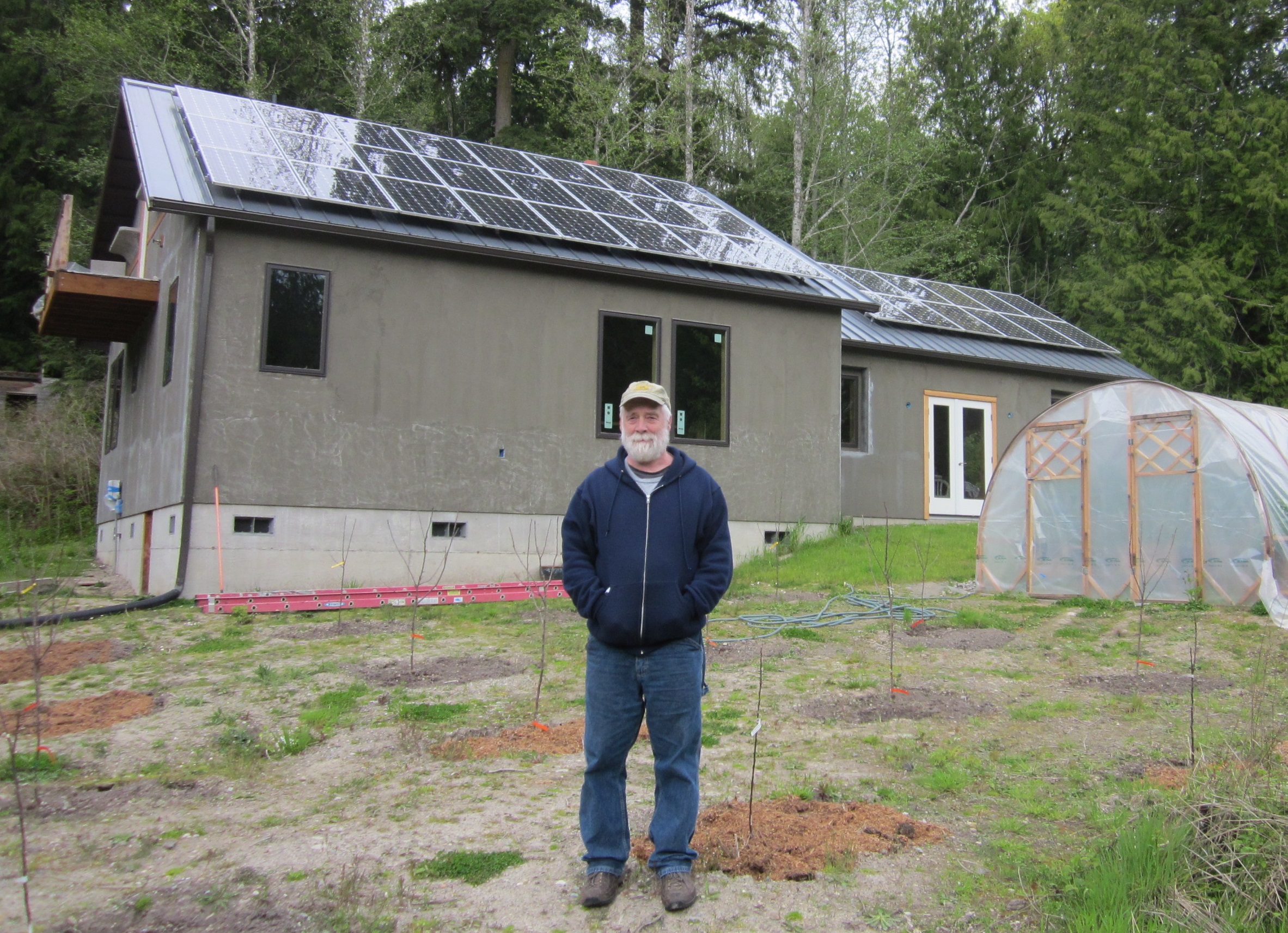
9.7 kw of SolarWorld modules installed in Chimacum, the solar capital of the central Quimper Peninsula. Roger is standing in tomorrow’s orchard.
Net Metering Limits – What is Reasonable?
I recently came across this interesting info-graphic. It is a couple of years old now and does not apply to Washington State. It mentions how different states look at determining a reasonable amount of power generation that can come from net metered solar, and uses examples of 15%, 25% (Hawaii), or 50% (California) and different thresholds to use as a basis for those percentages.
Here in Washington State, utilities are only required to allow 0.5% of the 1996 peak load – such a low threshold it is ridiculously limiting. Thankfully the utilities in which we have surpassed this threshold have seen no problems with allowing additional net metering systems. In the coming months we will be working closely with our legislators to address this archaic and potentially stifling limitation before it negatively affects our clients and our community.
Enjoy this explanatory graphic:
http://ilsr.org/archiac-utility-rules-stall-local-solar-infographic/
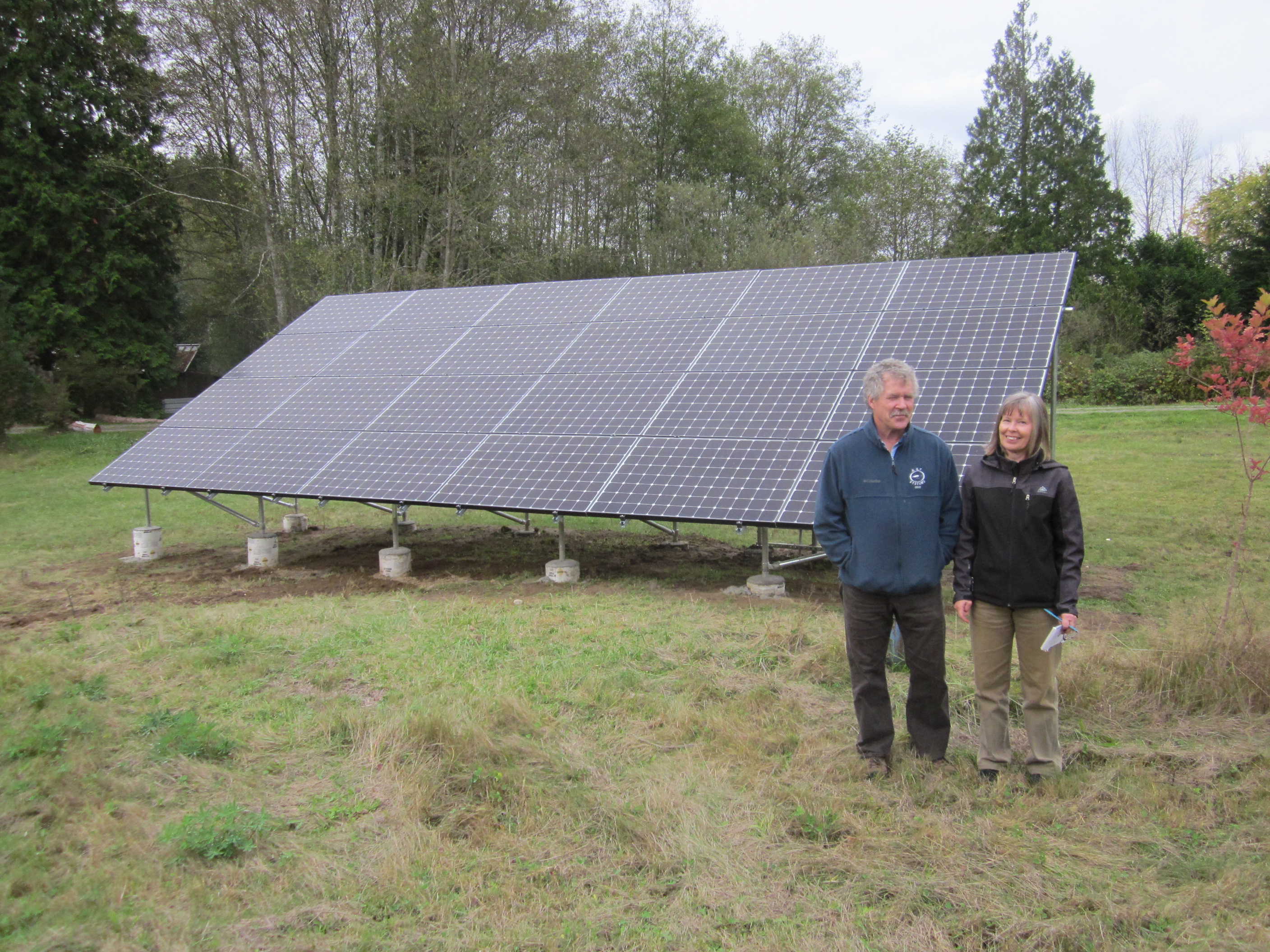
Another beautiful ground mounted array for beautiful people in Poulsbo, October 2014.
SunPower Achieves Cradle to Cradle Product Certification
SunPower Achieves Cradle to Cradle Product Certification
The most attractive aspect of pv modules is that they create clean electricity from the sun in a manner that is easily metered and utilized. This is obvious and easily quantified, but what about the manufacturing techniques used to make them? Our favorite manufacturer has gone out of the way to analyze their full production cycle.
SunPower is the first and only solar company to achieve Cradle to Cradle product certification; their E-Series and X-Series PV modules have been awarded the Cradle to Cradle Certified Silver distinction by the Cradle to Cradle Products Innovation Institute. The high efficiency SunPower E-Series and X-Series solar panels, manufactured at the company’s factory in Mexicali, Mexico, are the first and only solar products to be awarded this certification, which is based on the sustainable manufacturing processes implemented at this facility. The manufacturing aspects analyzed include material health, material reuse, renewable energy, water stewardship, and social fairness.
As I have mentioned many times, we are proud of our association with this leading solar manufacturer.

16.3 KW SunPower on Sequim barn in the Dungeness Valley, using E-327 pv modules, August 2014.
Our 100th Review on SolarReviews.com
A brief commercial message: we recently received our 100th review on the third party review website for solar installers. Of our 400+ clients, over 100 have now felt moved to leave a review of our process and services. We don’t pay this site, hence the lack of a full company profile (and another company’s ad on our review page!) but you might want to check it out anyway. http://www.solarreviews.com/installers/power-trip-energy/
If you had been able to tell me 12 years ago that we would have achieved this by now, I would have been elated. I am grateful to our clients and our Olympic Peninsula community for the opportunity and the support of our business. Please take a moment to take to look at this feedback and ask yourself if this is not the best you could wish for when choosing for a business to work on your home.
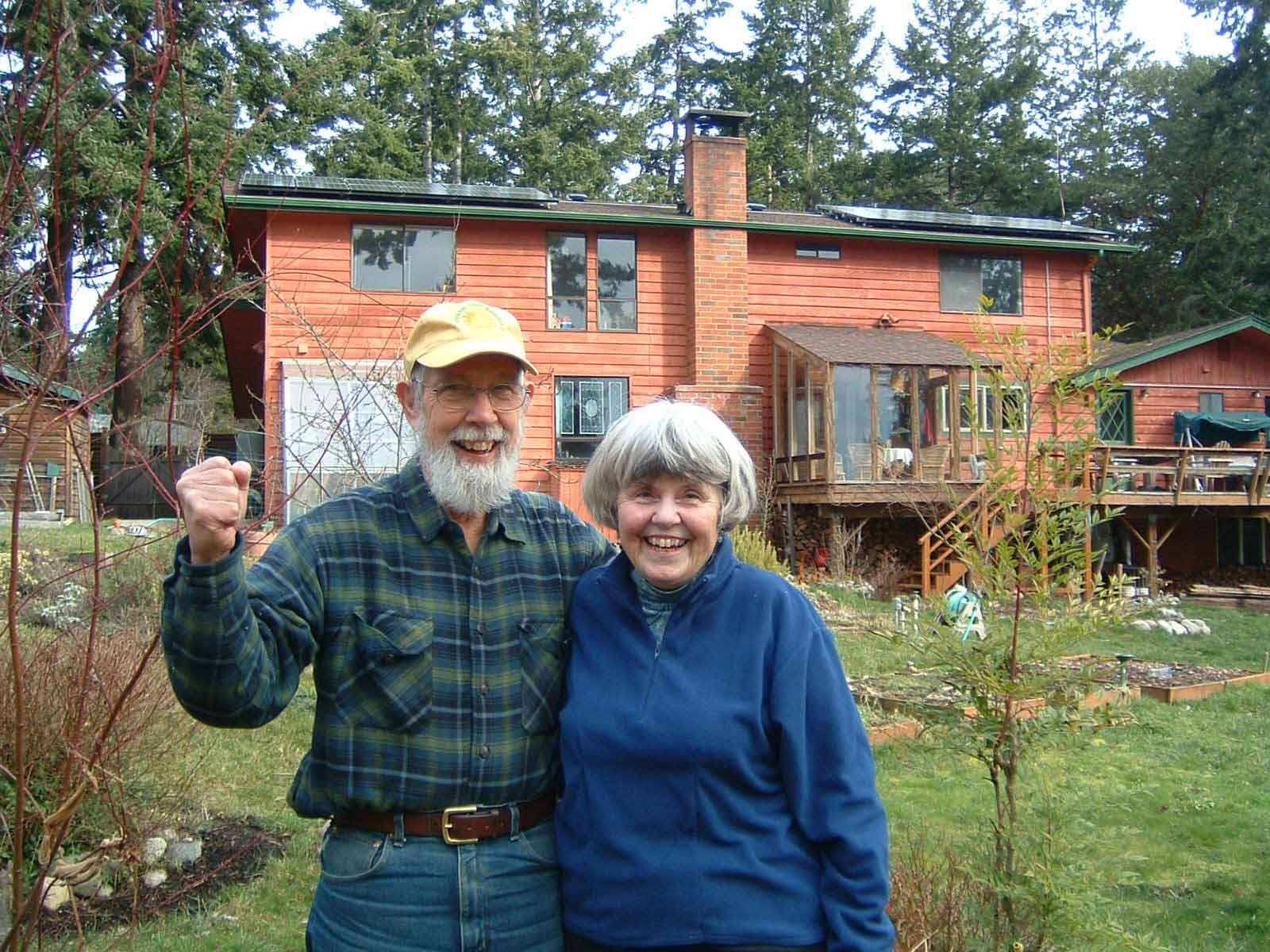
Washington’s Solar Financing Options are the Envy of Other State’s Residential Installers
While there has been debate in many markets about the pros and cons of residential leasing, it has been the leasing model that has been used in the majority of the residential solar installations nationwide for the past several years, forecasted to account for 68% this year by GreenTechMedia Research. Here in Washington State this has not been the case, because of the very carefully worded, complex and limiting state incentive legislation which has prevented systems owned by third parties, ie leased systems, from qualifying for our state’s Cost Recovery Program and its annual performance incentives.
Until very recently, we had very limited financing options to suggest for potential clients. If financing was necessary, it usually seemed like the best idea for people to refinance their house, since the interest rates have been so low, and that interest is then tax deductible. To my mind it also prevented people from borrowing more money than was reasonable, based on their financial situation. If they did not have equity in their house, perhaps they should address that issue prior to installing pv. However there were many potential clients who for some reason, reasonably, did not want to create or increase mortgage debt. The other financing options at that point were typical retail revolving credit like you might get at an appliance or audio/video store with higher interest rates from distasteful entities like GE Capital, which we would never offer. We will also not accept credit card payments. So we were usually stumped at this point.
All of that changed fairly recently with the availability of Energy Efficiency loans from Puget Sound Cooperative Credit Union. These loans are typically low interest (~4.5%), can cover various energy efficiency upgrades for the home including solar, and are not secured by the title of the house, but are only secured by the solar array itself. We are not involved in these loans other than helping provide information; we pay no fees nor receive any commissions.
When I speak with installers from other states, they are generally envious of the financing options we have here in Washington. Most of them are stuck offering leases that benefit the lenders more than the clients or installers, or have to pay fees to the lenders in order to offer low interest loans to clients. That’s why this article contains the “news” that new financing options in other states are now increasing their market share compared to leasing. http://www.greentechmedia.com/articles/read/Better-Cheaper-Loans-Challenging-the-Solar-Leasing-Model
So far this year, nearly a third of our clients have utilized PSCCU’s low interest loans and everyone who has qualified has been very happy in their dealings with this organization. Thank you PSCCU! http://www.psccu.org/efficiency.php#energysmart
Solar leasing companies are currently lobbying hard in Olympia for our state incentives to be opened up to their leasing models. Here at Power Trip Energy we keep an open mind and will evaluate any future available programs with bias towards our client’s best interest. In the meanwhile, we are very happy with the sensible low interest loans available to our clients.

US Residential Solar Installations Outpace Commercial Installations for the First Time
The pace of residential solar pv installation continues to grow dramatically. The growth of distributed generation is a disruptive trend and a welcome one. While some fear change, others embrace it. We are proud to be doing our small part to bring about that change.
Most pv going in right now is in utility scale projects by far. This report from SEIA states that residential installations have outpaced commercial installations, you can also gather other interesting statistics here:
On a philosophical note, while we applaud the installation of large multi-hundred mega-watt pv installations by utilities, it really only solves one aspect of the problems with our current system. Yes the utility-produced solar electricity is clean, carbon-free and better than coal, gas, nuclear, or big hydro from an environmental standpoint, however it is still the privatization of what is a universally distributed resource. “Who owns the sun?” is a question long asked. We are bathed in an abundant and beautiful resource reaching you in about 5 minutes from 93 million miles away. Just as much sunshine more or less reaches your house per square foot as anywhere else. So why should you pay someone else to turn that solar energy into useful electricity? As long as we continue to let others have control over our power resources, there will be economic injustice inherent in the system, and choices made that are not in your best interest. Without getting any more revolutionary, for you I recommend putting up your own pv array, and capturing that energy yourself without letting corporate middlemen insert themselves into your relationship with the sun. It is only through direct personal action that you can help make changes that benefit our environment and benefit your family as well.
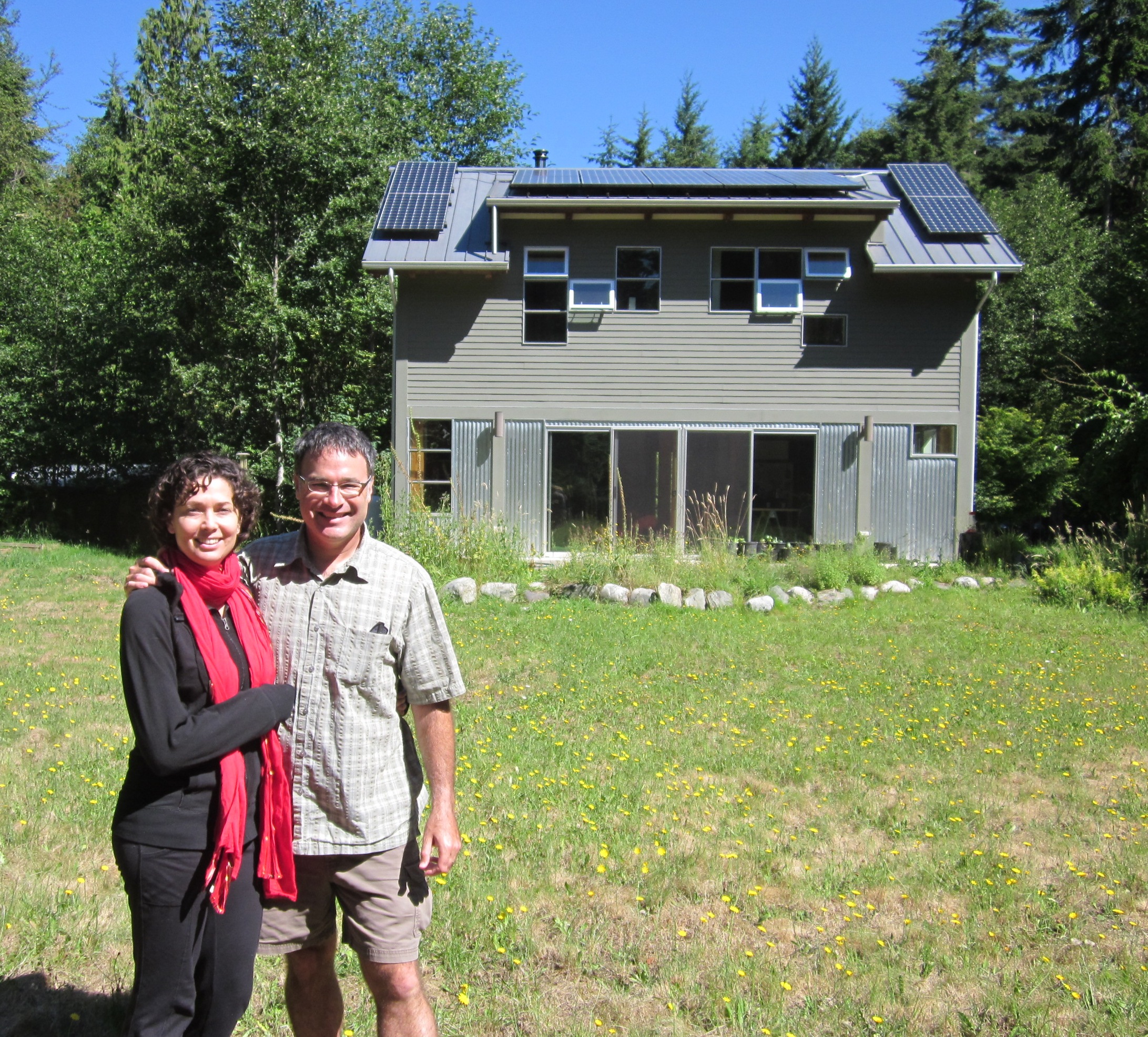
5.9 kw, Port Townsend, Spring 2014
The Largest US Utility-Run Roof-top Solar Program announced in Arizona
Arizona Public Service (APS) has been in my solar news pipeline quite a bit recently as they are generally whining about roof-top solar and attempting to obstruct progress and profit from other people’s investment by adding solar surcharges to monthly bills for net-metering customers who have installed pv on their homes. At the same time, they are scrambling to meet a 2025 RPS (renewable portfolio standard) requirement of 15% with a 3% solar carve out.
It now appears that APS will install pv modules on 3000 homes (20 MW total, 6.6 KW avg for each home) and give customers a $30 per month credit on their bills for the use of their roofs. The contract is the standard 20 years, so the total these customers will be paid is $7200 over the 240 months.
If pv array in Arizona makes 1800 kwh per KW per year, then that 6.6 KW pv array would generate 11,880 kwh/year (at times of peak load, which is the most valuable time to make electricity. If the average retail rate of electricity is 12.5 cents per kwh for residential Arizona electricity, then the retail value of the electricity made by that hypothetical 6.6 KW pv system is $1485 today (do you think the price of electricity might go up over the next 20 years?) For that amount of electricity, APS is willing to pay you $360, a rate locked in for 20 years. Hmm, thanks but no thanks.
If I am reading this correctly, it will look tempting to many, but its a very good deal for APS, and a bad deal for the customers. I’d rather own my pv myself and get the full benefit of all the energy it produces over its life, rather than lease my roof for a paltry $30 per month and let the utility get the bulk of the benefit. I’m thinking my sunny roof in Arizona would be worth a whole lot more than that.
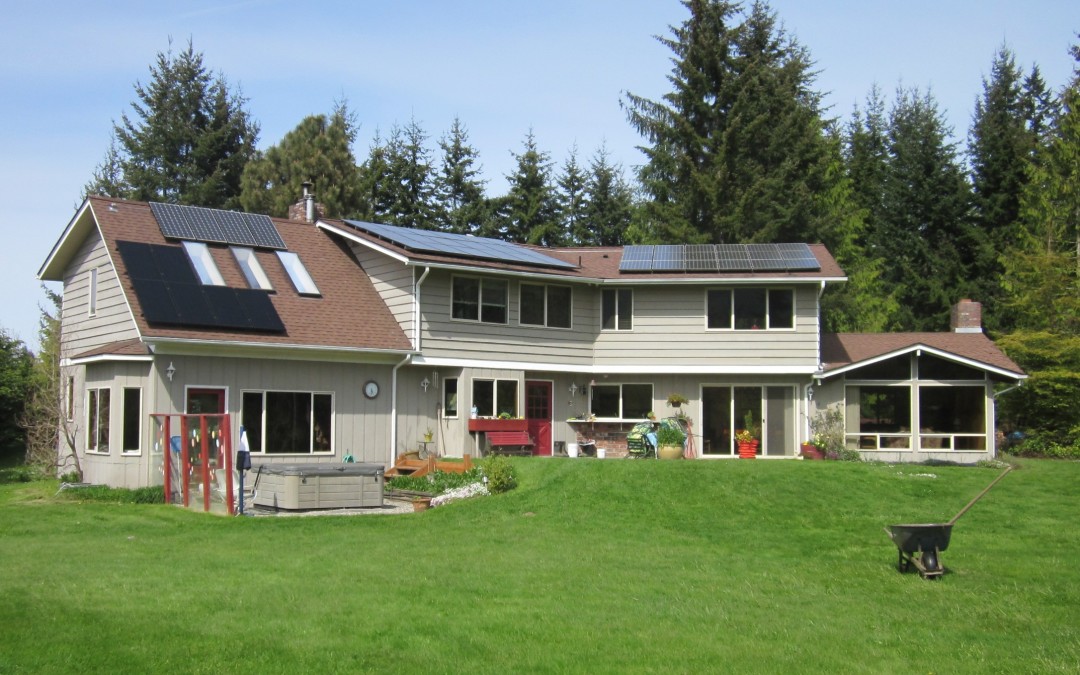
Turner – Phase 5
This photo is of a home just outside Port Angeles with which we are very familiar. We are familiar with this home because we have performed 5 pv installations there over the years, originally in 2006, when we put up 3.4 kw of Sanyo 190 watt modules, as pictured below. They are now up to a total of 8 kw. Our client views his consistent incremental upgrades as retirement investment and a hedge against rising energy costs. This couple is also environmentally motivated, and very well known in their community for their generosity with their time for civic causes. While we wouldn’t necessarily recommend you go about your solar installation in this way due to the increased labor costs compared to a single installation, we will be happy to work with you whatever your goals and thoughts are about pv.
Customer Service, Warranty and Loyalty
Our standard warranty is 10 years on our workmanship. Our initial contracts stated a standard one year warranty on workmanship, however as our installations aged, we were happy to learn that our workmanship is such that warranty issues never come up, so we gradually lengthened our warranty, and now after 12 years, we are very comfortable offering 10 year warranties on our work.
The standard inverter warranties are now 10 or 15 years, but in the early 2000’s, five years was the industry standard, and some of the inverters we sold from this era have since failed.
We recently heard from the current occupants of a home that had a system installed in 2004 that the system was not working. Dr. Meyers, our original client who built this home, loved fishing and was tragically lost at sea shortly after the project was completed. During our initial phase of business we sold the materials for the first 8 projects at our wholesale cost, in order to promote the technology and learn about the equipment without making a profit, and also to show gratitude to our initial clients. Dr. Meyers’ project was one of those initial projects.
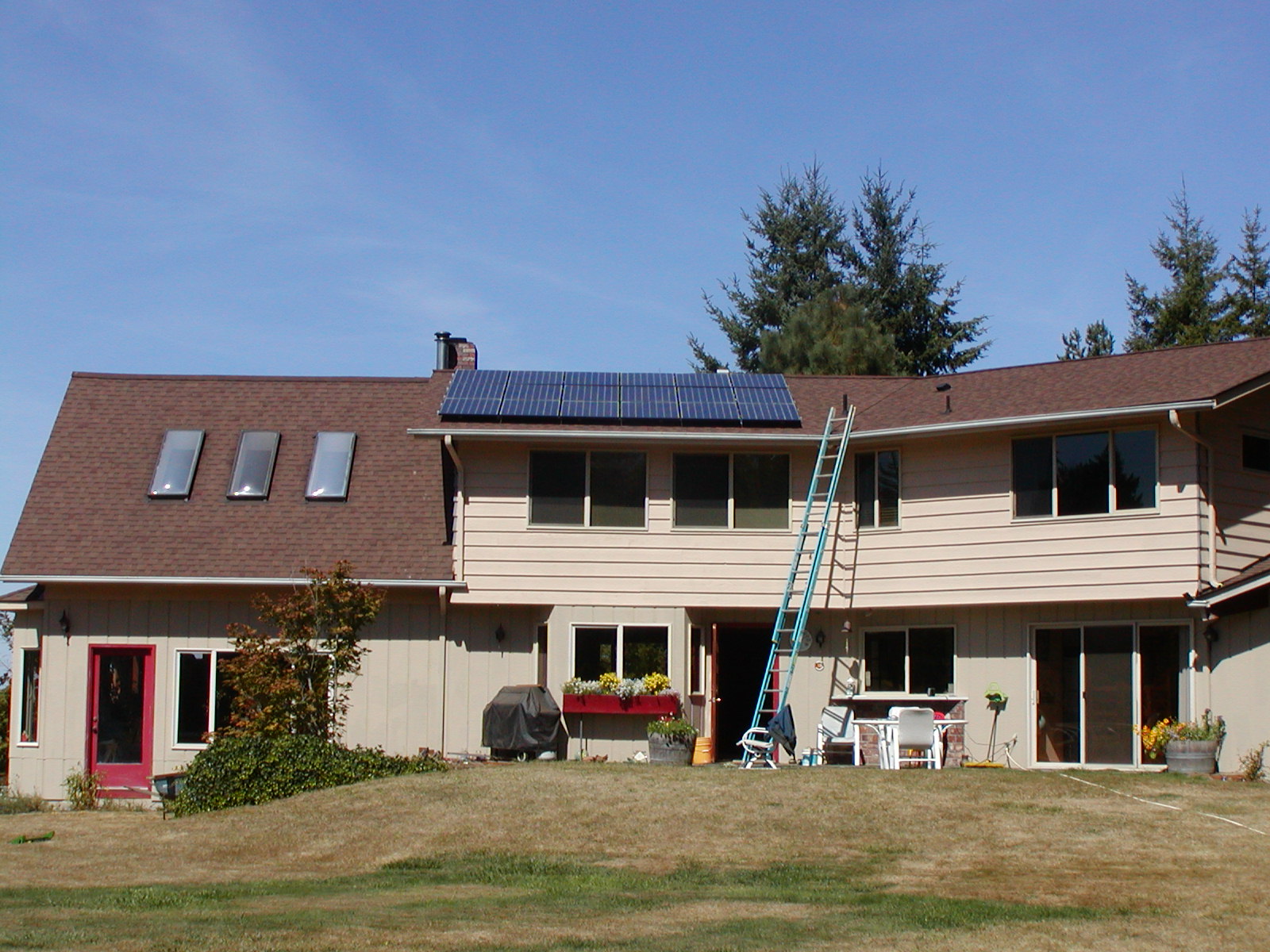
Upon arriving to troubleshoot, Steve determined the inverter had failed and was able to install another used SunnyBoy 2500 that had been originally installed on my home, for use with an array that has now been upgraded with more modules and a larger inverter. There is no remaining warranty on this inverter and there is no telling how long it will last, but the system is back up and running and once again producing clean power.
Although the system is over 10 years old, has no remaining warranty on labor or inverter, the project was sold without profit, and another contractor actually performed the installation, we felt able to do this repair with no need to charge the owner for the time or materials. Thankfully we are busy with great projects and have sufficient time and resources to take care of our clients, and we are happy to do so, especially in memory of a fine man.
https://powertripenergy.com/project/meyers-residence-3-kw-sequim-2004/
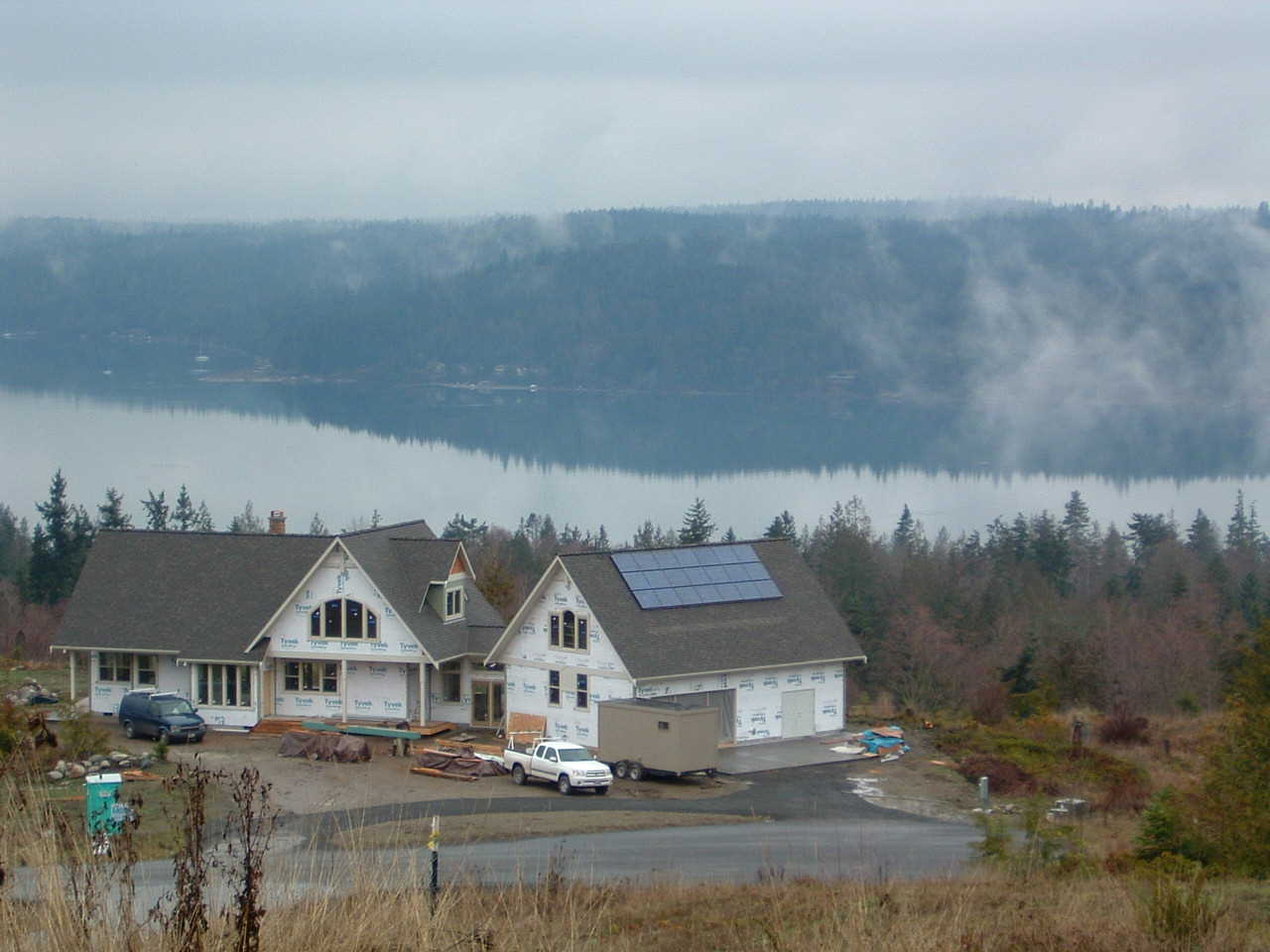
2004 pv installation during new home construction. Residence overlooks Sequim Bay.
Local Utilities Could Benefit By Targeting Transportation Market
Utilities should look for ways to encourage the adoption of electric vehicles, including working to increase public charging infrastructure, and recognize the opportunities for increased revenue through electricity sales to this new market.
Some people within utilities are spreading fear about lost revenues due to the uptake of distributed renewable energy generation and decreased consumption through energy efficiency improvements. They are wasting their time decrying the inevitable, and more importantly, they are missing the opportunity right in front of them.
In an article here by Elias Hinkley, the point was made that by encouraging conversion of our transportation fleet from of liquid fuel vehicles to electric vehicles, there is a huge untapped opportunity awaiting electrical utilities.
The benefits are many:
- the utilities can maintain revenue growth despite the adoption of distributed renewable energy and energy efficiency
- electricity can be made locally thereby benefitting the local economy rather than oil company tyrants
- cars would be cleaner, our cities and streets more pleasant for people who choose to breathe air
- globally we would be contributing less carbon into the atmosphere
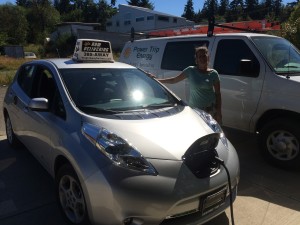 Here at Power Trip Energy, in addition to our 10 kw of pv arrays, we have two Level II fast chargers available to the public for free. We see old friends and meet new folks every day who regularly use the solar-generated electricity we choose to give away. It is fun to consider the amount of miles driven without these folks needing to buy gasoline.
We have been a destination for many tourists from out of the area despite the fact that our shop is not in the most convenient or desirable location for tourists. The trnsit stop is only 1/4 mile walk from here, and we are right on the Larry Scott Trail into town. The Broken Spoke bike shop will drop off a rental bike for people who make pre-arrangements before their visit.
In Jefferson County, the citizenry has already demonstrated leadership through the high per capita adoption of electric vehicles and solar pv. The question now is whether we will help our leaders see the benefits of following our example, or will we allow our leaders to retain old-school thinking and impede our progress.