USDA REAP Grant Seminar – Wed, Feb 17 – 9 AM – 12 Noon – Chimacum Grange
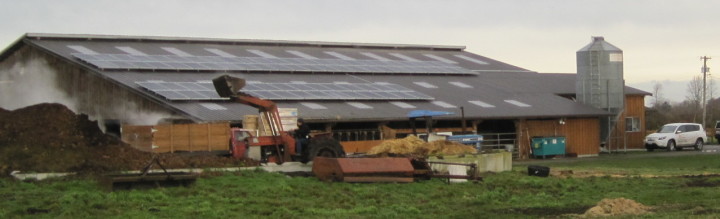
Dungeness Valley Creamery dairy barn
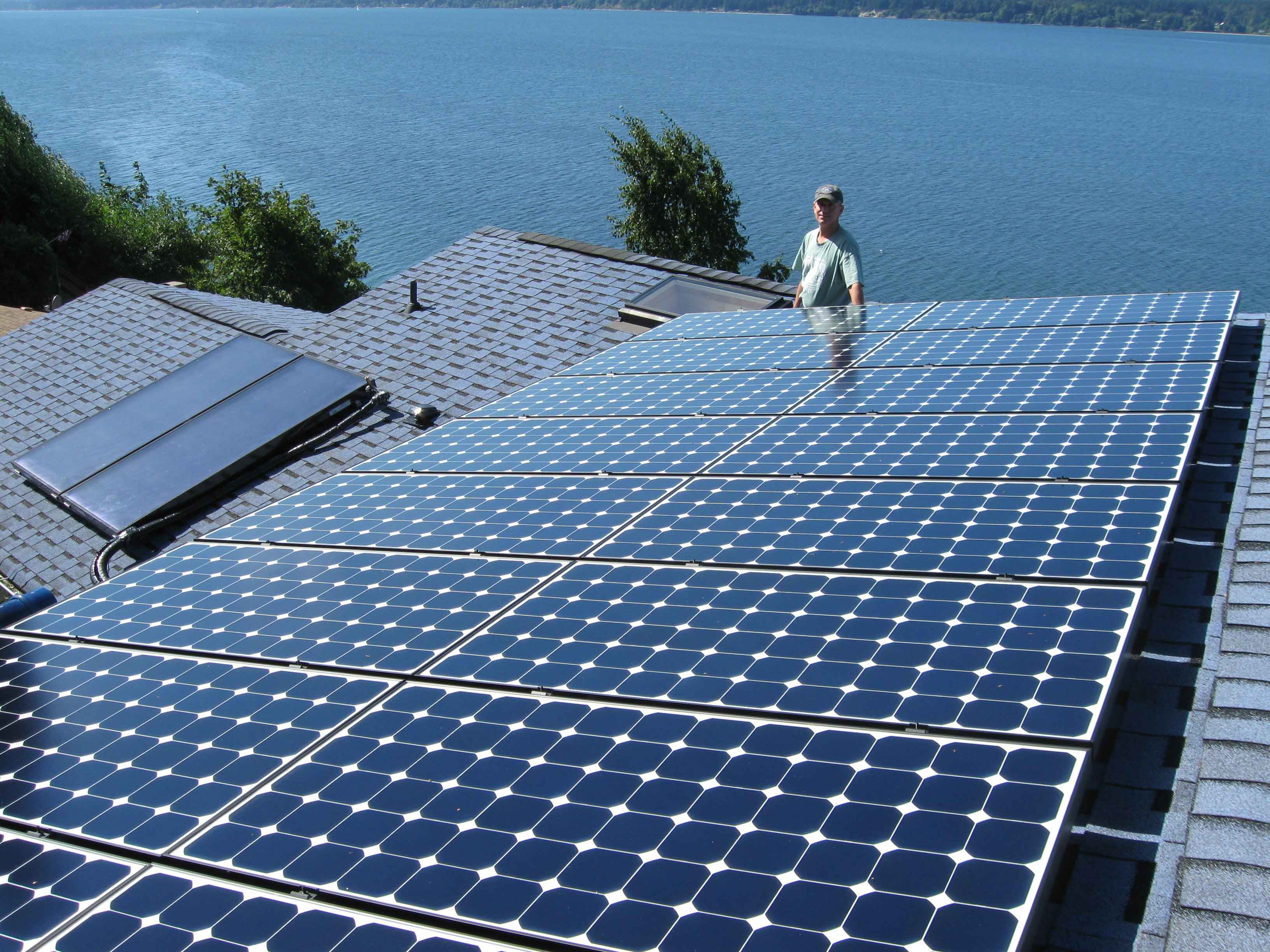
In 2015, Power Trip Energy assisted three local businesses receive USDA REAP grants that provided 25% of the funds for solar PV and other energy efficiency projects. We have installed solar PV at two of these businesses and expect to install at the third once the development of their new location is complete.
- Ryan McCarthey of Dungeness Valley Creamery noted “The solar PV system purchased with the assistance of the REAP program helped us decrease our energy costs and become more energy-independent.” He also stated: “Producing our own clean renewable energy not only reduces operating expenses, but it helps us communicate to our customers our passion and goals as a business. Being environmentally conscious and big picture thinking is integral to our long term sustainability.”
- Eric Jorgensen of Finnriver Cidery commented: “Finnriver is extremely excited to be partnering with the USDA REAP program and a local solar installer to work on a major solar installation at our new facility. The advice and assistance we received from USDA program staff were very helpful in helping us submit our successful application. If you are considering any alternative energy improvements we highly recommend finding out if you might be eligible for this great program!” And Crystie Kisler of Finnriver added “It’s important for our community to explore alternative energy solutions and this grant offers us a way to bring more innovative projects into our area.”
Washington State Solar Incentives – Cost Recovery Program (Existing and Ending) and HB 2346 (Proposed Legislation Being Considered in Olympia Now)
As many of you know, the declining state solar incentives here in Washington State are scheduled to completely sunset June 30, 2020. The cost recovery program has been one block in the foundation of solar economics here in Washington State since 2007. In that time, we have seen continued geometric growth, increasing the installed KW by ~ 40% per year. However its success is the cause of distress in many areas. Because the cap on the incentive was fairly low, that cap has now been breached in many utility areas, including Jefferson PUD. In Jefferson PUD for the program year July 1, 2014 – June 30, 2015, incentive applications were approximately $225,000 and the overall incentive pool was only about $155,000, resulting in prorated payments down to 70% of the regular base rate. At the inception of this program, there was virtually no solar PV market in the state, and nobody expected to exceed these caps by this time. This is an unfortunate and unexpected loss for the early adopters now that solar has gone mainstream.
Without a remedy to the loss of state incentives, we may well see a leveling-off of the solar growth. This might well result in layoffs at our company and others across the state. In Washington State right now, there are 128 companies that self-identify as solar companies, employing about 2400 people, nearly all installers. At Power Trip Energy Corp, we currently employ 10 people, and have installed about 3 MW since 2003.
State-wide solar capacity is now 60 MW installed, up from 11 MW in 2014, and 6 MW in 2012. Almost all of this installed PV is customer-owned, distributed generation making power at the point of use, and paid for by the property-owners. The state offers no up-front rebates, however there is a sales tax exemption, and also the 30% federal tax credit, which has helped people decide to invest their own money in solar PV on their homes and businesses. The main support the state offers for the installation of PV is the production incentive which pays for all PV produced, creating an economic mechanism for the additional value we see in solar above and beyond electricity generated by coal, nuclear, and the federal hydro-system on the Columbia and Snake Rivers. As mentioned above, the state solar production incentive is nearing the end of its useful life.
Despite the current solar capacity of 60 MW seeming large to some of us, it is important to remember that this is still responsible for much less than 0.5% of our overall electricity portfolio.
There is currently proposed legislation that will create a second phase of state incentives, which will close the existing program and accept new enrollments through 2020 and would provide 10 years of incentive stability for new enrollees in which to make fair financial returns, while decreasing the incentive rate structure every year between 2017 and 2020. This is called HB 2346 – Promoting a Sustainable Renewable Energy Industry – and you can view the full details here: http://app.leg.wa.gov/
This bill is the result of a two year process bringing together multiple stakeholders including the nascent solar industry, utilities, environmental groups, and consumer advocates. We are strong supporters of this bill for many reasons.
Since 2002, we have placed our own self-interests inline with the belief that our community and our state would be well-served by developing a robust renewable energy infrastructure. We have made the case that individuals should invest in renewable energy on their own homes as a way to generate some of their own capital, decrease their dependence and expenditures upon utilities. This serves the individuals by increasing the value of their home, and decreasing their energy bills in the long run. It serves the community by keeping more money local, and making the overall community more resilient. It also contributes to the overall global benefit of producing energy without contributing the the carbon emissions of coal, the radioactive waste of nuclear plants, or the environmental degradation of the mammoth federal hydro system.
This bill supports those goals by allowing individuals to continue to benefit from investments they make in their own home through the diversion of a portion of the state’s utility tax. Due to the relative low caps per project on this incentive, it is only incentivising small (generally under 20 KW) solar pv arrays, which will nearly all be installed on residential and small business rooftops. Since these arrays are installed at the point of use, there are no inefficiencies from transmission losses.
In this way and others, the promotion of distributed solar energy benefits all ratepayers. Northwesterners do benefit from the cheap electricity produced from investments made in this federal system decades ago (despite its decimation of salmon and other problems). Likewise will future generations benefit from our efforts today, as we diversify our energy infrastructure with more solar producing clean renewable distributed energy.
For these reasons and more, we support HB 2346, and urge you to do the same.
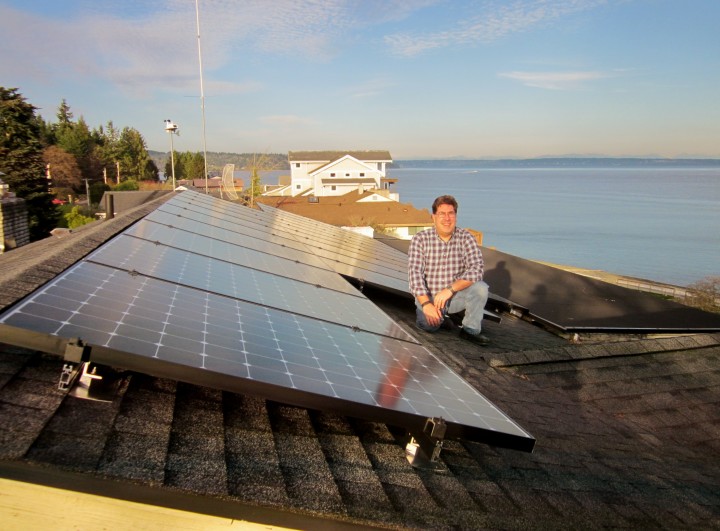
2016 forecast – 2015 review
As we take off running into 2016, here is a brief look back at 2015. We are struck by the progress on several clean energy fronts in the second half of 2015.
The EPA’s Clean Energy Plan announced in August will hasten the transition to non-carbon based electricity generation. This represents a significant increase in the EPA’s authority over state’s energy policies and fuel use, although it doesn’t dictate how states reduce CO2 emissions, just that they must reduce or they must pay to participate in carbon reduction markets. This will be a long and winding legal road through numerous court challenges, but certainly represents a progressive step towards cleaner air. http://www.epa.gov/
This ITC extension is very good for the solar industry as well as taxpayers because instead of looking at a bubble in 2016 and perhaps a decrease in 2017, we are looking at several years of more predictable growth. A very good forecast and details of the tax credit schedule are in this Utility Dive article: http://www.utilitydive.com/news/what-utilities-need-to-know-about-solar-growth-after-the-itc-extension/411139/
California’s Net Metering 2.0 does not affect us directly, but represents a major confirmation that very high levels of distributed pv should be valued at the retail rate at the point of use. http://www.utilitydive.com/
Unfortunately we have seen some back-sliding in some states where the utility industry has a more unified influence on the government regulators, as in Nevada and Arizona. http://www.technologyreview.
Locally we saw another record year for pv installations in the state and at Power Trip Energy. Here at Power Trip Energy, we installed 570 KW last year, an 18% increase over the previous year, compared to ~40% growth overall in the state in 2015.
The question will now be what the WA legislature does. We stand at a crossroads here in WA. Will we lead the way to a cleaner environment and healthier economy, with individuals empowered to improve their homes and reap the benefits. Or will we back slide at the behest of utilities which are clawing to hold onto a past they can not have as their future? We are founding members of Solar Installers of Washington and through this group we are supporting efforts in Olympia to address our state programs.
Regardless of what our national and state governments do, we will continue to serve our clients by surveying the renewable energy industry and providing our best assessment of what makes the most sense for our clients, and performing quality turn-key installations.
Thank you to our clients and best wishes to everyone for 2016!
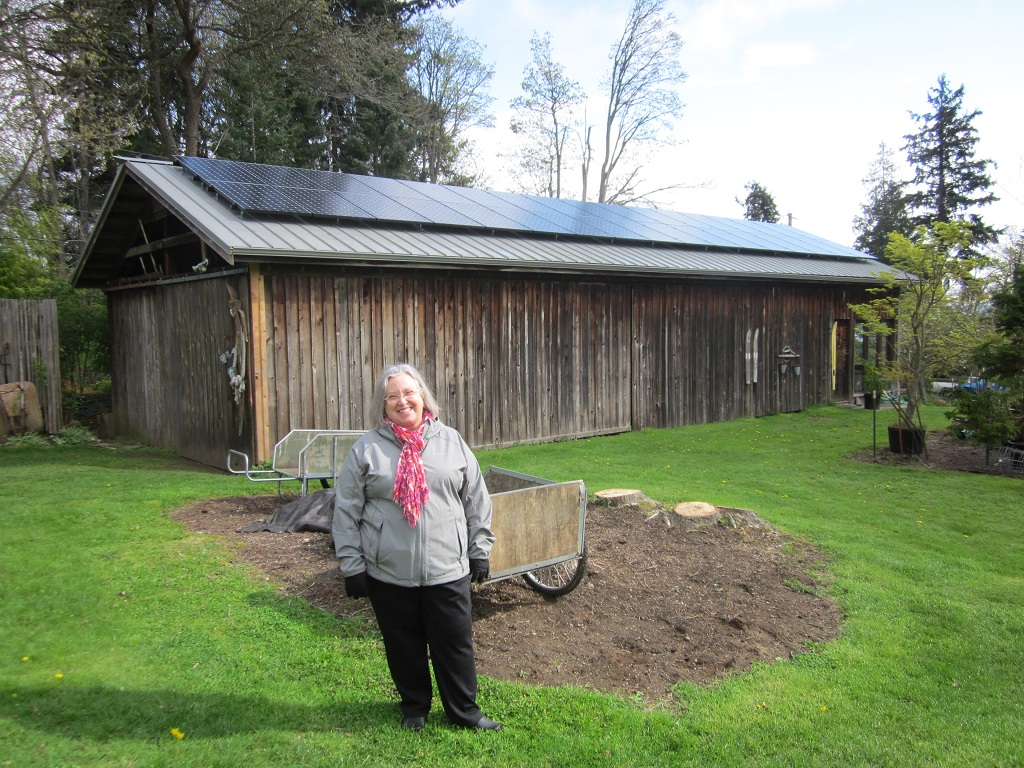
11 KW of SunPower PV at Nancy’s home in Kingston, WA
Some Net Metering News from Various States
“Net Metering” describes the relationship between a utility and its customer when the customer has rooftop solar that is sometimes feeding the grid in addition to supporting their own loads, and the customer is compensated at the same rate as they are charged per kwh consumed or provided. In Washington, we have a net metering law requiring utilities to accept net metering systems up to a total capacity of 0.5% of the 1996 peak load. For more info read here https://powertripenergy.com/solar-faq/
Many utilities are now reaching that level, and due to the PR efforts of national electric industry interests, some local utilities are using language they have heard which threatens solar here in Washington. Increasing the legislative caps on net metering is crucially important to allowing private individuals the freedom to invest their own funds in upgrading their house with solar, and being compensated at a fair rate for the clean electricity they provide to the utility. Unfortunately the legislature has had a difficult time addressing this issue, even though the present cap of 0.5% of a peak load from 20 years ago is miniscule.
Here is how three other states are faring, based on recent news:
Hawaii’s Utility commission has voted to end net metering after seeing solar on as many as 16% of the homes on Oahu. This is poor policy, and will probably lead to grid-defection among some people who can afford batteries and who have large parcels (Hawaii law requires utility electrical service on standard small residential lots.) http://www.greentechmedia.com/articles/read/hawaii-regulators-shutdown-hecos-net-metering-program
New York regulators have suspended the caps on net metering in an effort not to interrupt installations as reaching the current 6% of load cap is imminent. http://www.utilitydive.com/news/ny-regulators-lift-solar-net-metering-caps-until-rev-docket-sets-der-values/407667/
In Vermont, the net metering cap was raised from 4% to 15% two years ago, a cap that has now been reached. Regulators are considering removing the cap. http://www.washingtontimes.com/news/2015/oct/24/vermont-reaching-net-metering-cap-with-solar-expan/
Based on the level of solar other states are working to achieve, if you hear anyone talking about solar causing problems in Washington at 0.5% capacity, your response should be skepticism.
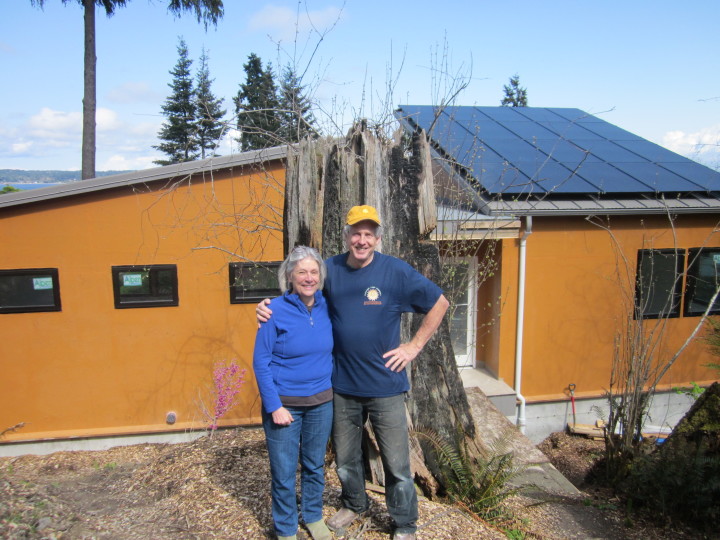
Solar Energy Capacity Increased 56% in Washington in 2014
Environment Washington has released a report calculating a 56% increase in solar pv installed in Washington State last year over the existing capacity. A 56% increase in capacity in one year is tremendous, and agrees with our experience and observations.
We are seeing a similar increase in 2015, and forecast that we will again see that increase over 2015 in 2016. A portion of this growth has been driven by the decrease in price of solar pv modules, and a portion of 2016’s growth will be due to the expiration of the Federal 30% tax credit.
To qualify for the 30% Federal Tax Credit on solar, a project must be complete by Dec 31, 2016. We are currently booking projects for Spring of 2016, and we forecast that our installation calendar for 2016 will be filled before the middle of next year. We are also still looking for another qualified licensed electrician to join our team and further increase our installation capacity.
For solar capacity to continue to grow at this rate in Washington after the conclusion of federal incentives, we need to increase our net metering capacity by updating our once progressive but now dated net metering law. Increasing our state’s required net metering capacity requires no expenditures on the part of the state or utilities, it merely enables individuals and business to invest their own money in upgrading their facilities with solar.
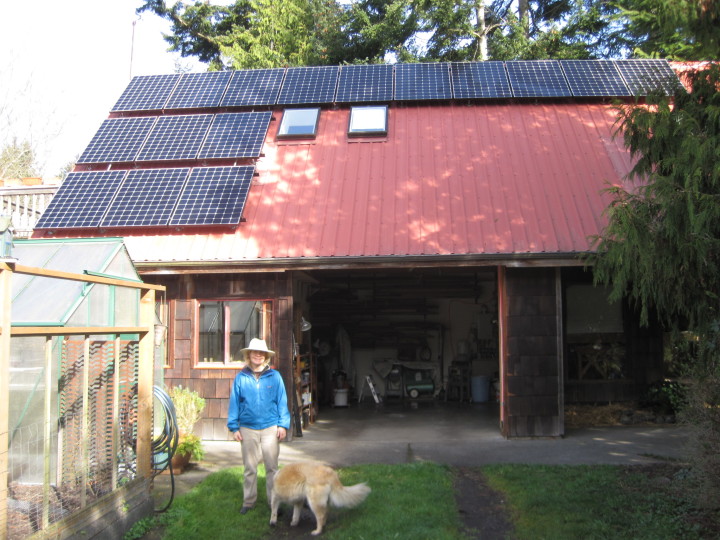
Job Opening for Electrician
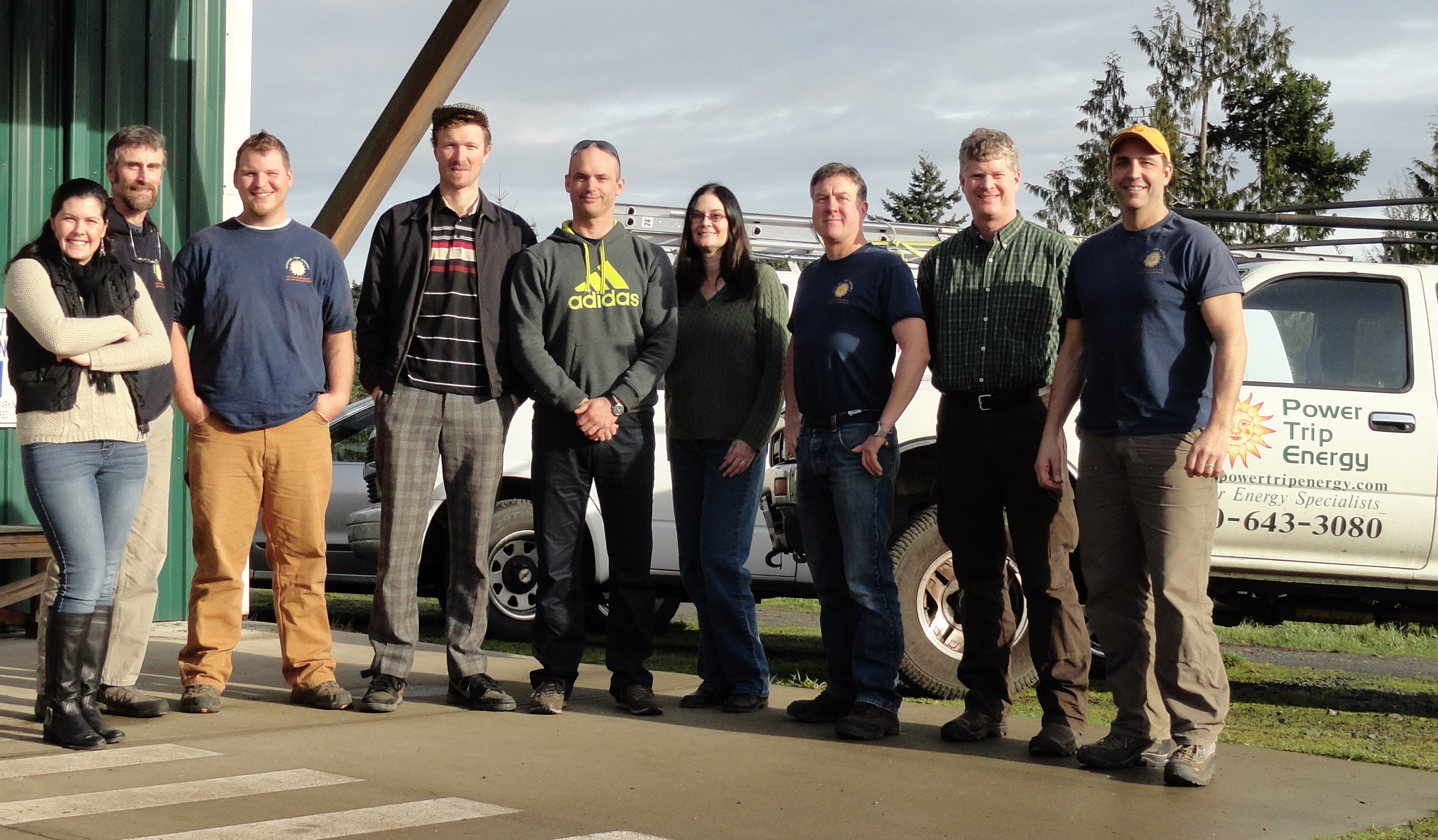
We continue to have more interest than we can service at the moment, and as we continue to hire and train, our current needs are greatest for another electrician. Please pass the word about this great opportunity for the right person.
http://olympic.craigslist.org/trd/5157049962.html
Electrician (01 or 02) for Solar Installs (Port Townsend)
The work tasks include:
— Site evaluation to determine best method of roof access
— Roof work while harnessed.
— Mounting, grounding, and wiring pv modules to the racking
— Conduit runs from roof to electrical panel, sometimes in attic or crawlspace
— Installation of inverter and other equipment, electrical interconnection to existing or sometimes new electrical service panel
— Maintenance of clean job site, properly stocked work vehicle, and warehouse
If you can do those tasks well in four 10 hour days per week, we offer:
— an excellent work experience with good pay
— on-the-job and classroom training
— company group health plan
— profit sharing
— vacation accrual and sick pay, and
— quarterly bonuses based on company performance
— all while doing the right thing for our clients, our community, and the environment.
Our crew is open to installers who work with a positive, cheerful, and professional attitude.
To apply please submit a resume, no calls or walk-ins please.
Solar Article from Sequim Gazette
Alana Linderoth does a good job writing an update from our recent Sequim Solar Tour, and covering Clallam PUD’s new interconnection requirements. Sequim has seen a relatively high rate of grid-tied pv installations and will continue to do so despite additional expenses due to Clallam PUD’s new rules.
http://www.sequimgazette.com/news/311067641.html

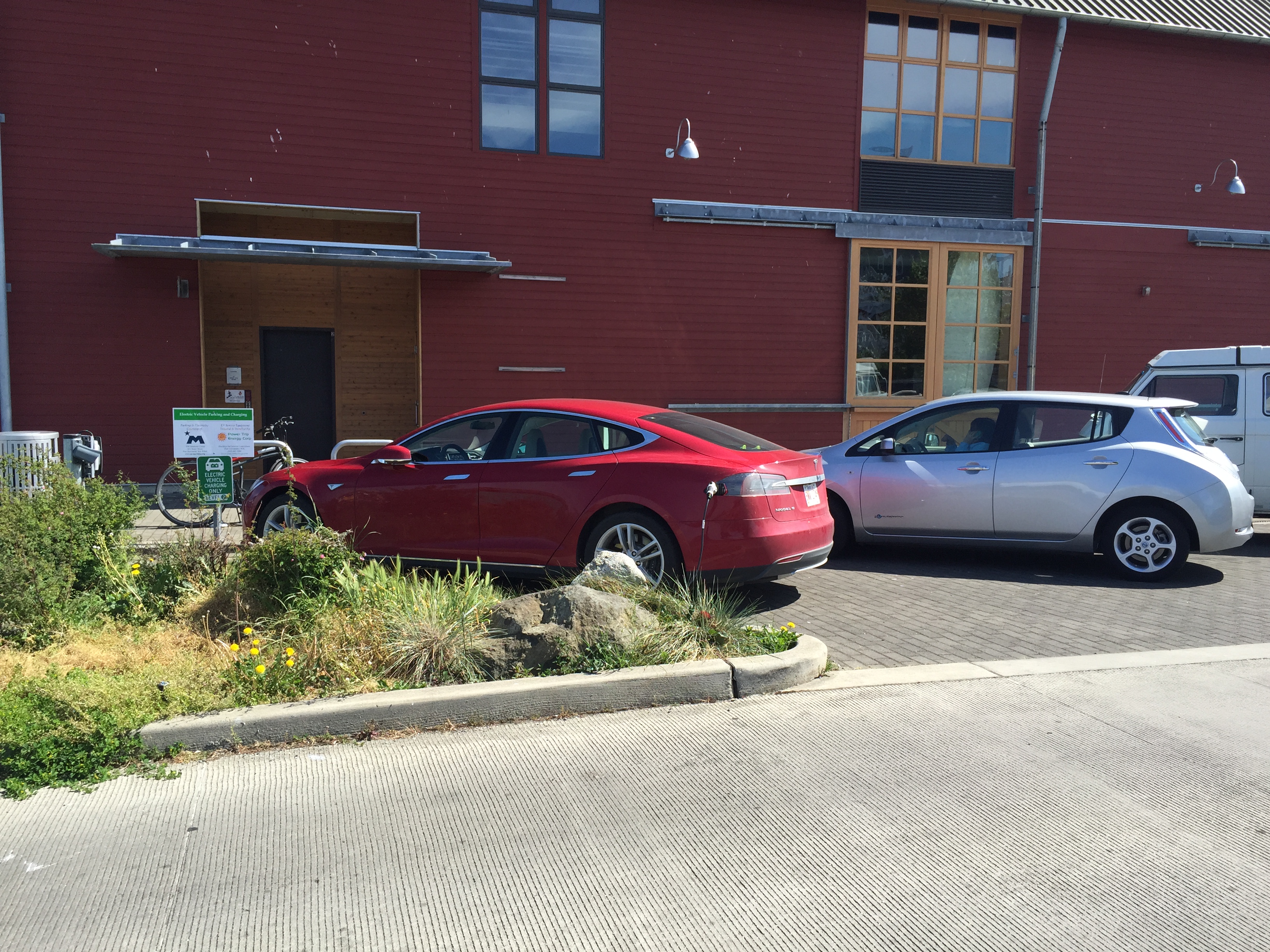
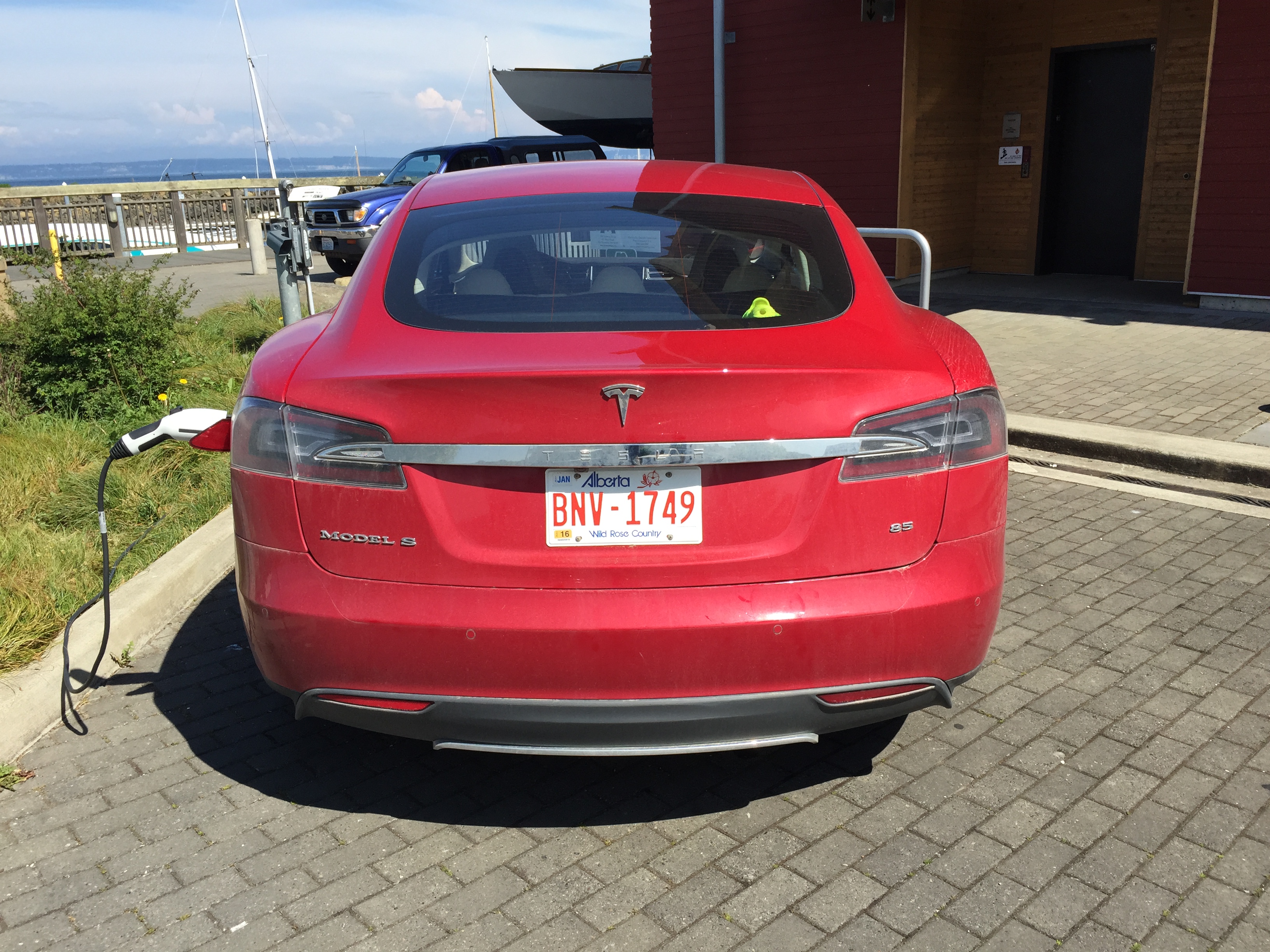
Visitors from Alberta, driving Tesla Model S, using Public EV Charge Stations
I did not get the chance to speak with these folks, but I did notice there was also a Nissan Leaf driver who pulled in to use the charging equipment while it was already occupied. I made sure she knew about the other stations in Port Townsend, and she explained that she came up from Port Ludlow to shop in PT, appreciated the EV stations so she could feel comfortable running many errands and expanding her range.

Power Lunch Kitsap – May 21 – Graeme Sackrison, Thurston Climate Action Team
Our speaker on the 21st is Graeme Sackrison, Board Chairman of the Thurston Climate Action Team. T-CAT is a non-profit that focuses its efforts toward energy efficiency and transportation projects that help combat climate change. Join us for this Power Lunch and learn how things evolved with Thurston Energy, where they found success, what they are still trying to accomplish, and some lessons they’ve learned. The Kitsap, Bremerton and Bainbridge communities also have active energy efficiency efforts…and we’ll have a conversation comparing their experiences with ours. RSVP through Eventbrite with this link;https://powerlunchkitsapmay21.eventbrite.com
This is the third in our monthly Power Lunch Kitsap Series, presented by Power Trip Energy and Rice Fergus Miller Architecture and Planning.
The event is 12:15 – 1:15 pm, Thursday May 21, at RFM’s office at 275 Fifth Streee, Suite 100, Bremerton, WA 98337. These are brown bag events, feel free to bring your own lunch.
Tesla Powerwall
Tesla’s recent product announcement is quite a PR achievement. Yes I’m sure it is an engineering and manufacturing achievement as well, and hopefully will be increasing efficiency and decreasing cost of home storage. It is not quite as revolutionary as it appears, and currently unavailable. I expect we will still be talking people out of batteries for the most part, even after we get our hands on the first Powerwall that becomes available to us, which will most likely be 12-18 months from now.
Tesla hasn’t contacted us yet to partner on these installations. I have found that a couple of articles from Wired magazine seem to have the same initial perspective that I have, linked below.
In the meanwhile, we will continue to install grid-tied pv so you can make your own energy. There has never been a better time to install your own solar, and any work we do for you on that front now will be easily integrated with residential storage at a later date, be it from Tesla, SunPower, LG or any of the other Lithium battery products, once they become available and prove themselves reliable and reasonable.
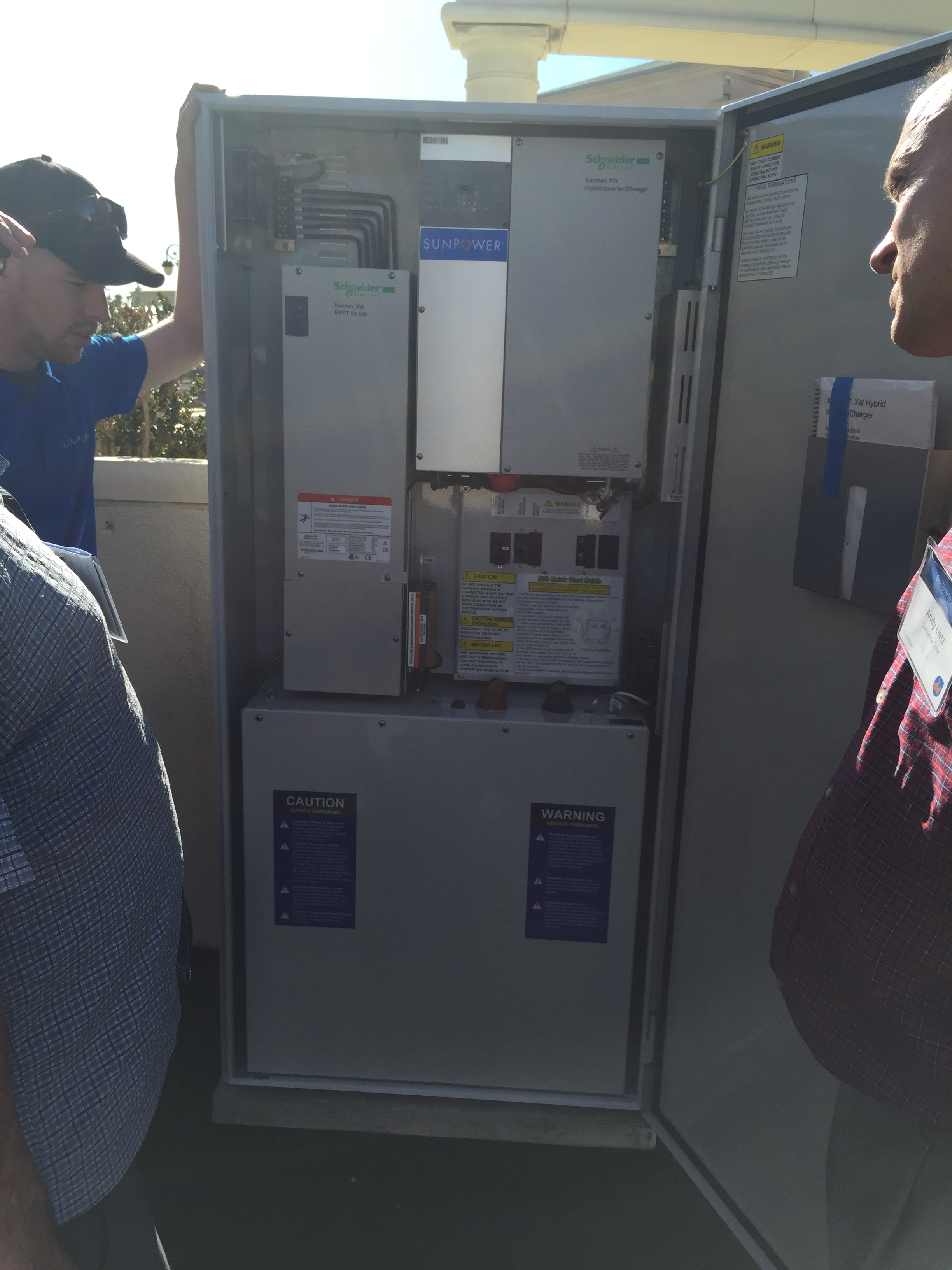
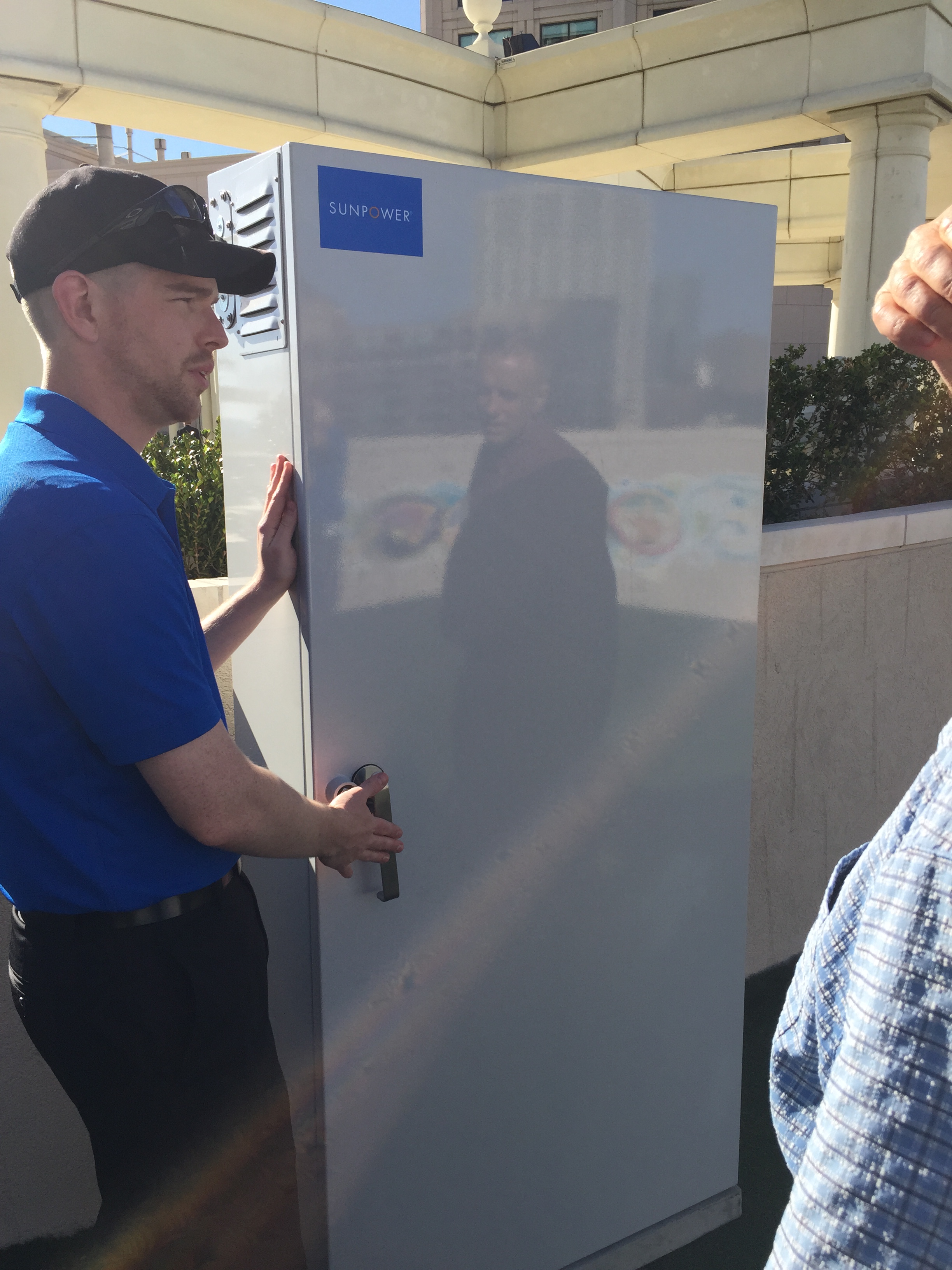
Pictured below is the Lithium battery storage available from SunPower that I viewed a couple of months ago at the SunPower dealer event. This unit includes the inverter and charge controller, which are necessary but not pictured in all of the Tesla photos so far, nor included in the published pricing.
http://www.wired.com/2015/05/teslas-batteries-will-power-home/
http://www.wired.com/2015/05/get-tesla-home-battery-let-physics-explain/